


 JOIN MY MAILING LIST
July, 20
2026
Benin Photo Tour 2026 Report
Harry Fisch
For nine days in 2026 we followed the drums of Vodun from the lanes of Ouidah to the Atlantic surf — through sacred forests, a stilt city on a lake, and the red-earth roads of the interior — with the camera as our only passport into a Benin few outsiders ever reach.
THE SEA
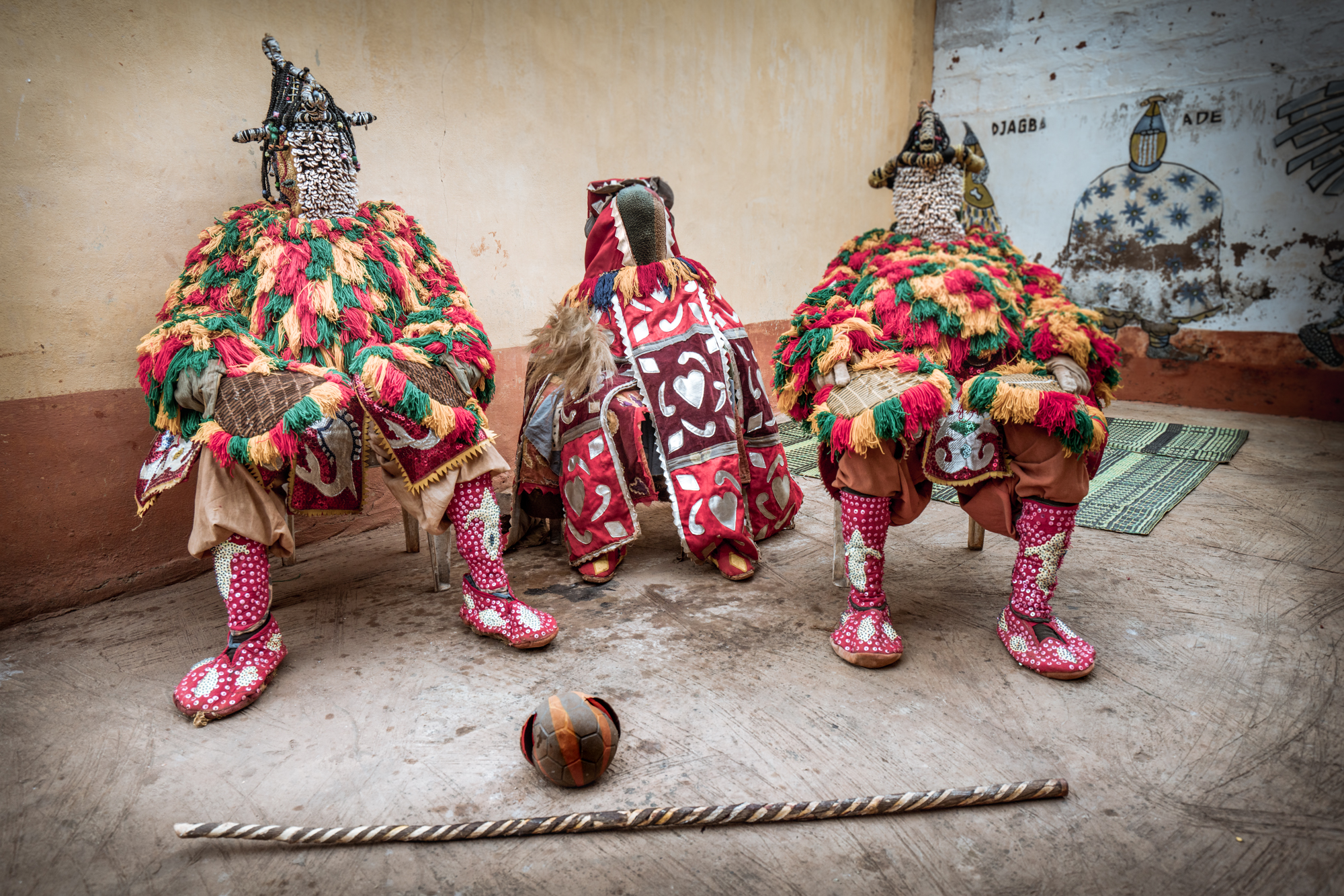
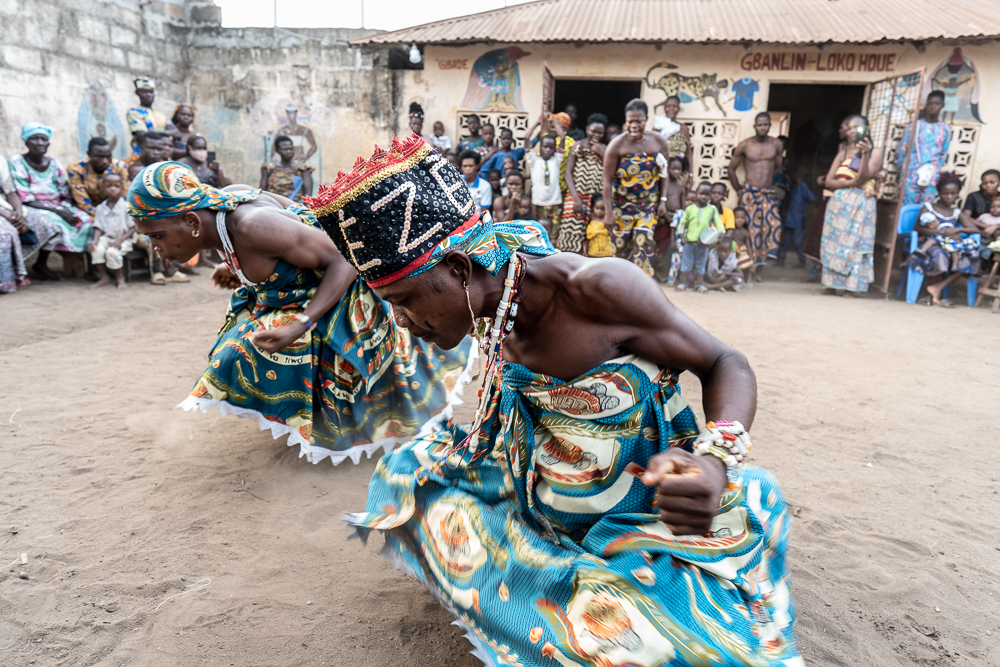
At the beach, beside the Gate of No Return — the monument that marks where so many were taken from this shore — the celebration reached its pitch. Griots threw themselves into acrobatics atop tall poles. Straw fetishes, the bodies of the deities, spun wildly across the sand. Around them, devotees in vibrant cloth danced without pause, and men with faces painted white, hung with amulets, reeled in a state close to ecstasy. We spent the whole morning inside it, photographing.
LAKE AHÉMÉ
In the afternoon the road took us to Lake Ahémé, the sacred lake of Benin’s Vodun communities. In an animist village, again through our guide, we watched the older, unmediated form of the faith: ritual sacrifice and dance ceremonies that still bind the living to the dead. We stopped at Bopa to photograph the high priest at his temple before the day closed in Possotomé.

ABOMEY
At first light we set out for Abomey, the cultural and spiritual centre of the country. On the way we stopped at the fetish market of Bohicon, where representations of countless deities are made and sold — some taking shape at the stalls as we watched, a rare look at the material culture of belief. Abomey itself, a UNESCO site, gave us the royal palaces and museum of the Dahomey kings, and then the plazas of the central neighbourhoods, where traditional dances turned in the open before we slipped into the streets for the ordinary life of the city.
RED EARTH
Beyond Abomey the journey climbed into the foothills of Agonlin, along red-earth roads cutting through wide, open country — among the most beautiful landscapes we crossed. This is the land of farmers and Fulani nomads, who carry two remarkable visual traditions: ritual tattooing and elaborate hairdressing, worn with quiet pride as markers of who they are. At a nomad camp we shared a picnic, then continued on foot to their villages — portraiture at its most meaningful, made of time, access and trust rather than haste. Further on, near Ketou, we found the Holi, a Yoruba subgroup distinguished by facial tattooing, and spent a full day in their markets and villages, where the marks read as a language of lineage and devotion. As evening came we reached Porto Novo, the political capital, and walked its Afro-Brazilian quarter — built by freed slaves who returned from Brazil — through streets layered with Yoruba, Afro-Portuguese, French and English memory.
GANVIÉ
Then came Ganvié, the place they call Africa’s Venice — a vast stilt community raised above Lake Nokoué. The Tofi people settled here in the eighteenth century, seeking refuge from the slave trade, and have lived on the water ever since. We moved through it by boat: the morning catch coming in, dugout canoes sliding between houses, domestic tasks carried out at the water’s edge, children at play on wooden platforms. A whole world built on the surface of a lake, where every gesture seemed to belong to a community that had chosen freedom over land.
THE COAST
From Grand-Popo we followed the Atlantic toward Cotonou, stopping for the fishermen who work this stretch of the Gulf of Guinea — the wooden pirogues, the enormous drag nets, the full physical drama of communal fishing against the surf. Nearer the city the architecture shifted, marked by the building of the late twentieth century, and we pushed in at last to Dantokpa, one of the largest markets on the Gulf — a dense, sensory weather of traders, goods and colour that felt like the whole country emptying itself into one place.
CODA
Benin had not revealed itself all at once. It came in pieces — drums at dawn, a white-painted face, the cool of a sacred grove, a canoe crossing still water — and by the end those pieces had become something whole. We left with cards full of frames and the rarer sense, uncommon on any journey, of having been let in rather than merely shown around.
