


 JOIN MY MAILING LIST
January, 27
2022
Benin Photo Tour, more than Voodo.
Harry Fisch
There is much more to Nomad Photo Expeditions’ photo tours than Voodoo. We are interested in the culture and life of one of Africa’s most vibrant countries: the markets, the Sunday churches with the beautifully dressed women, the tribes of northern Benin.
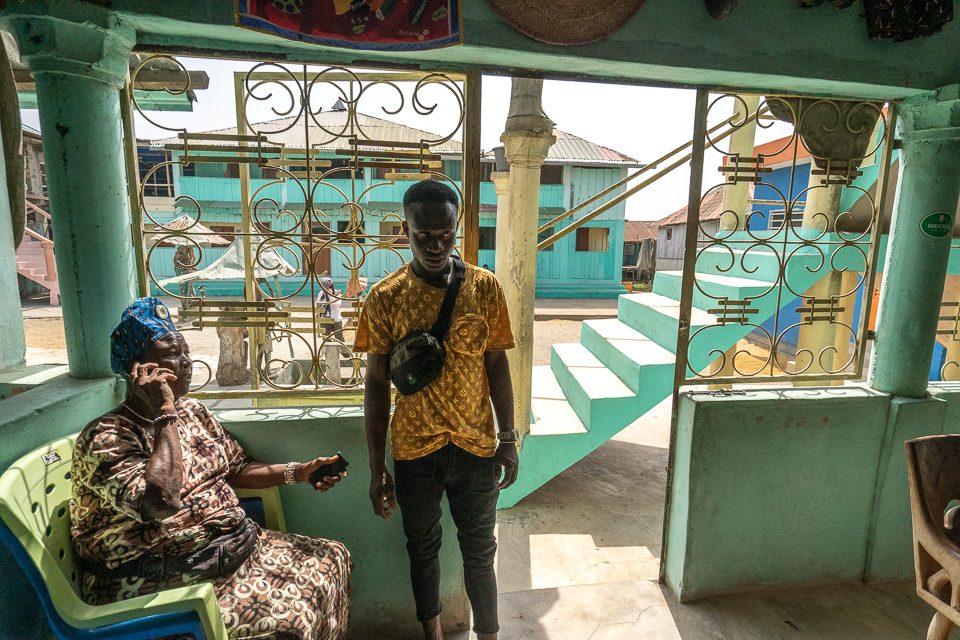
The best Benin Photo Tour in the world today.
Nomad photo tour to Benin is possibly one of the most impressive photographic experiences organized in a photo tour. If a picture is worth a thousand words, explore the images of our photo tour and compare the photographic experience to any other. Our photo tours are always human-centered and a natural extension of documentary and lifestyle photography. You will have unique access to unique personal and photographic experiences as we have in most of the trips we organize for the last 12 years. This is the 4th edition of the Benin Photo Tour.
As a result of our numerous photo tours in Benin, we’ve established a list of contacts and friendships that give us a considerable advantage when it comes to sharing local voodoo rituals and making our best pictures.
We will visit Ouidah which is the world center of Voodoo. There we will exchange impressions with our friends, from major Voodoo priests to local princes.
We will have an audience with a king, a real king in his palace. We will meet his family. A special experience in the framework of a personal relationship developed over years of visits.
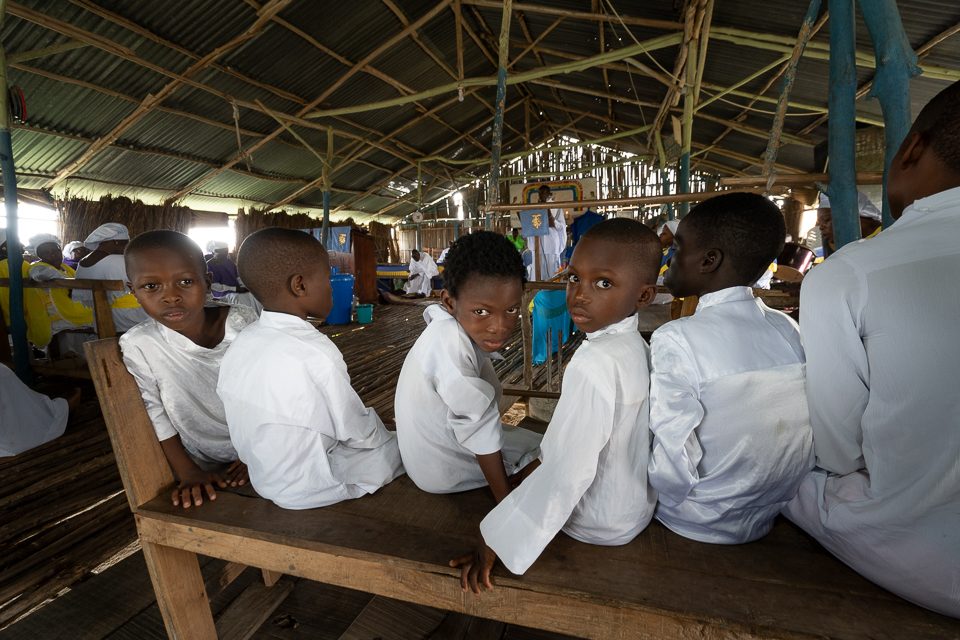
We’ll visit floating churches lost in a fishing lake. Incredible ceremonies.
Our photography tours in Africa, as well as the rest of our routes, are designed to infiltrate and share the cultural activities that provide the best photographic opportunities. We visit and explore the various landmarks associated with voodoo its story during our photo tour of Benin.
Only in Benin is voodoo recognized on an equitable basis with the Catholic Church.

Unique access to a photographic adventure.-
Only in Benin is voodoo recognized on an equitable basis with the Catholic Church. According to official statistics, this religion is practiced by between 12% and 20% of the current population.
But there is much more to Nomad Photo Expeditions’ photo tours than Voodoo. We are interested in the culture and life of one of Africa’s most vibrant countries: the markets, the Sunday churches with the beautifully dressed women, the tribes of northern Benin.
On all of our photo tours, but especially on the Benin Photo tour, we strive to find a theme that will guide our entire program and photographic itinerary. In Benin, the obvious choice was voodoo.
While many other religions practice voodoo, its influence was undisputable during Dahomey’s reign and among the Yoruba and Fon ethnic groups.
As a result, it became an essential part of the country’s intangible as well as tangible cultural heritage. Along with founding a religion, Ouidah established an annual festival.
Only in Benin is voodoo recognized on an equitable basis with the Catholic Church.
Ouidah is the domain of the Zangbeto fetishes, night guardians who come from secret societies, dance like spinning tops covered in raffia, and are feared throughout Benin and Togo’s Yoruba region.
Additionally, there is the Python Temple, which is located just fifty meters from the French-built Catholic church.
Although it is practiced by a large number of others, the voodoo cult had an undeniable influence on the construction of the country’s history during Dahomey’s reign and among the Yoruba and Fon ethnic groups. As a result, it became an integral part of the country’s intangible as well as tangible cultural heritage.
This word is used to describe all of the gods or forces that men try to appease with their strength or kindness. It is both a proclamation of the existence of the supernatural world and a set of guidelines for interacting with it. Voodoo, which is inextricably linked to cultural differences and pagan cults, became entwined with the slave trade.
A vast kingdom known as Dahomey existed in what is now southern Benin, complete with a powerful army dubbed the “Black Sparta.” This kingdom became a vital trading partner for the Portuguese, who exchanged ivory for red coral, a decorative element that became a symbol of power for Dahomey’s royalty. The rulers of this kingdom engaged in human trafficking and enriched themselves through triangular trade, which bolstered their position relative to neighboring clans. On the so-called “slave coast,” Benin’s coastal region was a critical juncture.
Don’t miss this opportunity, sign up for our photo tour in Benin. The world is changing fast and there are worlds that will never be the same again.
You can join us on this photographic adventure in Benin
