Oct. 09 - 18, 2027
$9,700
CRAFTED TO SURPASS EXPECTATIONS
From the uncharted, misty landscapes, to the indomitable Tiger’s Nest, This is no ordinary tourist trip, but an authentic journey not only across the country’s borders, but the borders of its history.

Founded Nomad Photo Expeditions in 2009, bringing with him a practice rooted in people photography and cultural documentation. His work across remote destinations has been recognized repeatedly by leading international photography institutions, establishing a well-documented record of artistic and field excellence.

Roberto Pazzi is an award-winning travel photographer and co-leader of Nomad Photo Expeditions. A self-taught photographer who began his career as an engineer before dedicating himself fully to cultural storytelling. With over 60 destinations explored, his work is published in prominent international media and honored by distinguished photography organizations worldwide

Founded by Harry Fisch and led together with Roberto Pazzi, Nomad has spent all these years refining the art of photographic exploration. Exciting challenges in remote destinations are treated as opportunities, not setbacks — a direct result of accumulated experience, deep local knowledge, and sustained commitment to exceptional field delivery.

Beyond stunning locations, we secure uncommon access to people and places most visitors never reach. Through trusted local networks built over decades, we create entry points to remote villages, living traditions, and ordinary life — offering consistent opportunities to capture images of genuine cultural depth and lasting human significance.
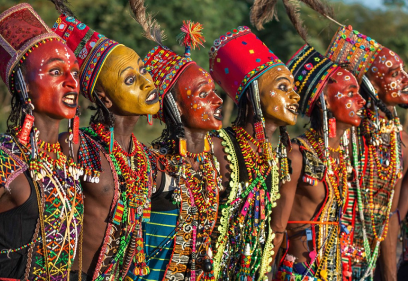
We travel in small groups of 4–10 participants to preserve a more immersive and fulfilling experience. This encourages genuine engagement with each place and thoughtful photography, while providing individual coaching, meaningful feedback, and a respectful creative environment where every participant has the space and time to produce their best work.

 (855) 245-4205
 info@nomadphotoexpeditions.com
 Mon–Fri 08:30–17:00 (ACST)
Your tutoring is provided by Harry Fisch and/or Roberto Pazzi, both internationally recognised travel photographers, with hired models arranged at points along the way to enrich your portrait work. Experience is not a prerequisite. The schedule is built around photographic opportunities, and the leaders give hands-on guidance on light, composition and approach. Beginners and professionals travel side by side, and non-photographers are welcome too, so you can join with whatever level of skill you bring.
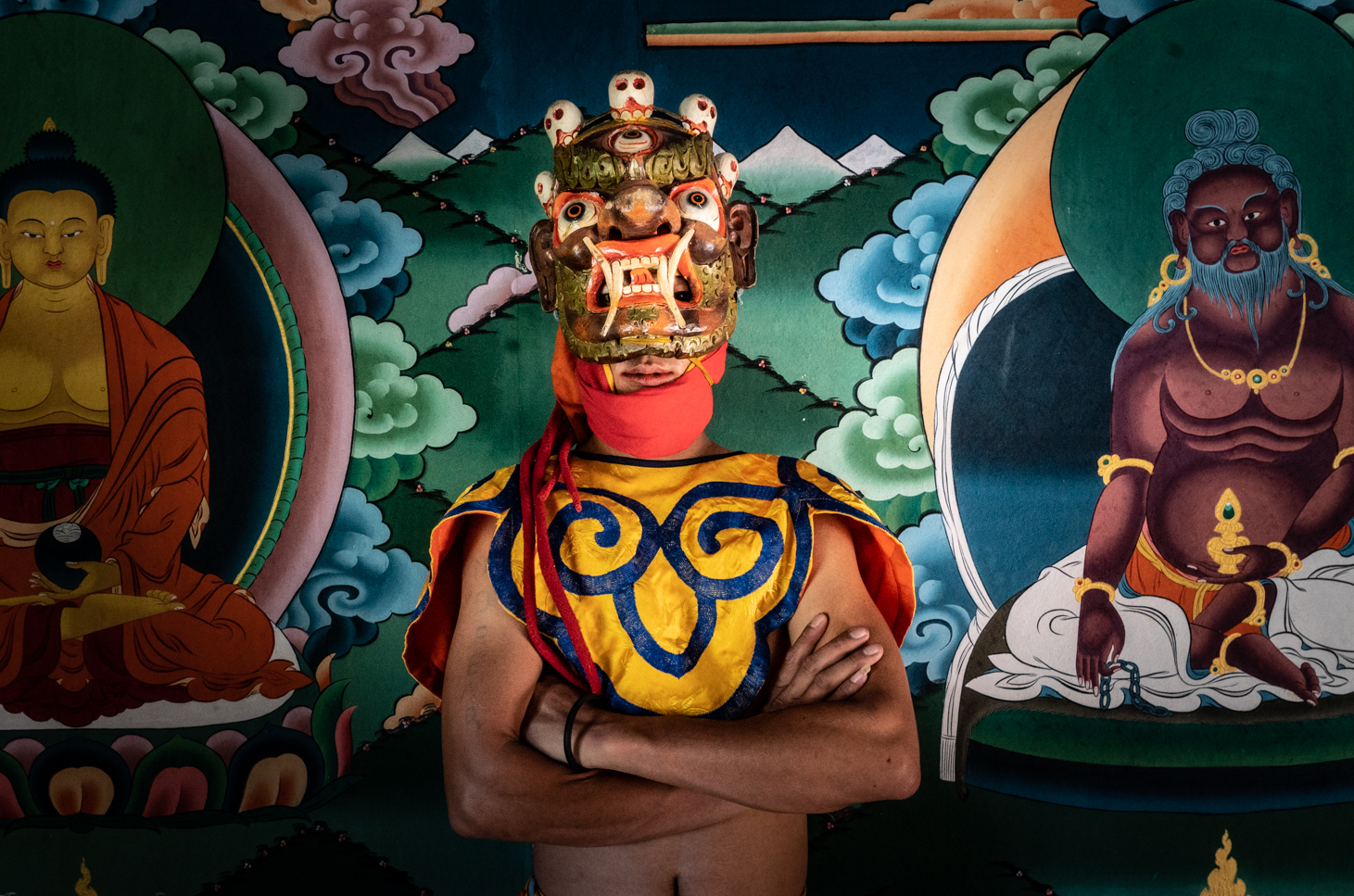
This tour is scheduled around late March and early April, when spring brings clear Himalayan views and, crucially, the Paro Tshechu — one of Bhutan’s grandest religious festivals, with sacred masked dances and the dawn unfurling of a giant silk thangka. Because festival dates are fixed only a few months ahead, we ask that you allow two or three flexible days either side of the trip. The next departure runs 25 March to 3 April 2027.
Yes. Bhutan requires a visa together with its Sustainable Development Fee, which is normally processed through the tour operator rather than at an embassy; we will guide you through what is needed. Because the journey begins and ends in Delhi, you should also check whether your nationality requires an Indian visa for the connection. The Bhutan visa and related government fees are not included in the tour price and are arranged separately for each participant.
Bhutan is widely regarded as one of the safest destinations in Asia, with very low crime and a strong tradition of hospitality toward visitors. You travel with a Bhutanese guide and a private vehicle throughout, and the pace is unhurried. The main practical considerations are mountain roads, changeable spring weather, and altitude on the higher passes and the Tiger’s Nest climb, so steady footing, layered clothing and sensible pacing matter more here than any security concern.
Accommodation is in comfortable three- and four-star and tourist-class hotels chosen for character and location. The route moves through Thimphu, the Phobjikha (Gangtey) Valley, Punakha and Paro, with a night in Delhi at the start, staying at properties such as Access Suites or Hotel Osel, Namgayling Cottage, Zen Punakha or Meri Puensum, and Himalayan Keys or Tenzinling resorts.
Within Bhutan you travel in a private, air-conditioned vehicle, winding through mountain valleys with drives such as Thimphu to Gangtey of around five hours and Punakha to Paro of roughly four. The trip opens with a flight from Delhi to Paro across the Himalayas, with views of Everest and Kanchenjunga, and closes with the return flight to Delhi. That Delhi–Paro–Delhi sector costs approximately 650 US$, is booked on your behalf, and is not included in the tour price.
This is rated a Level 2 trip requiring reasonable fitness: you should be able to walk at a comfortable pace while shooting, stand for stretches, manage stairs and uneven ground, and handle your own luggage. The headline effort is the hike to Taktsang, the Tiger’s Nest, about six kilometres round trip with roughly 700 metres of ascent to around 3,120 metres, taking four to five hours with breaks and porters along. Those who prefer can stop at the cafeteria viewpoint, and gentle valley walks offer easier alternatives.
The centrepiece is the Paro Tshechu, with its masked dances, silk costumes and the dawn Thongdroel ceremony, alongside the cliffside Tiger’s Nest monastery. Beyond the festival you photograph imposing dzongs, monks and devotees, prayer-flag hoisting at Dochula Pass, the black-necked crane valley of Phobjikha, breakfasts and ceremonies with monks, farmhouse life, and an archery match. A private traditional dinner with masked dancers and folk music in Thimphu adds an intimate, colourful set of portraits to the journey.
Harry Fisch is a world-recognized travel photographer who founded Nomad Photo Expeditions in 2011, leading small-group cultural photo tours across more than 50 countries. His acclaimed work has earned international honors—PX3 Gold in Paris, IPA Awards of Merit, a MIFA Bronze in Moscow, Grand Prix de la Découverte jury awards, Photoespaña and Lens Culture—celebrated worldwide for its human depth.
Roberto Pazzi is a world-recognized Italian travel photographer, an engineer-turned-expedition-leader who partners with Nomad Photo Expeditions across more than 60 destinations. His acclaimed work has earned global honors—2025 European Photography Awards Photographer of the Year, Smithsonian, PX3, TIFA Gold, MIFA, BIFA and New York Photography Awards—and reached publications worldwide including National Geographic, GEO, The Times and The Guardian.
The tour costs 10,900 US$ per person on double occupancy, with a single-room supplement of 1,230 US$. The price includes photographer tutoring, all meals in Bhutan except on arrival and departure days, all specified transfers in a private air-conditioned vehicle, three- and four-star and tourist-class hotels, hired models, an English-speaking guide, and all listed activities and visits. Not included are international flights, the Delhi–Paro–Delhi flight of around 650 US$, visas, airport taxes, tips to guides and drivers, and personal extras such as drinks and laundry.
This is Bhutan approached as a photographer first and a tourist second. The itinerary is timed to a major tshechu and threaded with privileged moments — a private cultural performance and traditional dinner in national dress, breakfasts inside working monasteries, hired models, and unhurried sessions at dzongs and high passes. Rather than ticking sights, you are positioned for the dawn light, the ceremony and the quiet encounter, guided by leaders who know exactly when and where the country reveals itself.
Groups are kept small — six to eight participants on this departure — which keeps the experience immersive and gives everyone real room to work. Smaller numbers mean individual coaching, considered feedback, and a calm, respectful presence in monasteries, at festivals and in village homes, where a large coach group would feel intrusive. It also allows the flexibility to wait for light, linger over a scene, or adapt to shifting festival dates in a way standard tours rarely can.
Much of this trip is built on arranged, intimate access: a private traditional dinner with masked dancers and musicians in a heritage home, breakfasts and prayer ceremonies with monks at Chorten Ningpo and Gangtey, a butter-lamp ceremony and hands-on session at an art school, yak-butter tea with families in a remote valley, and a farmhouse lunch followed by archery. Hired models and trusted local relationships open doors and create unhurried, consent-based portrait opportunities that independent travellers would struggle to organise.