Oct. 31 - Nov. 10, 2027
$7,900
CRAFTED TO SURPASS EXPECTATIONS
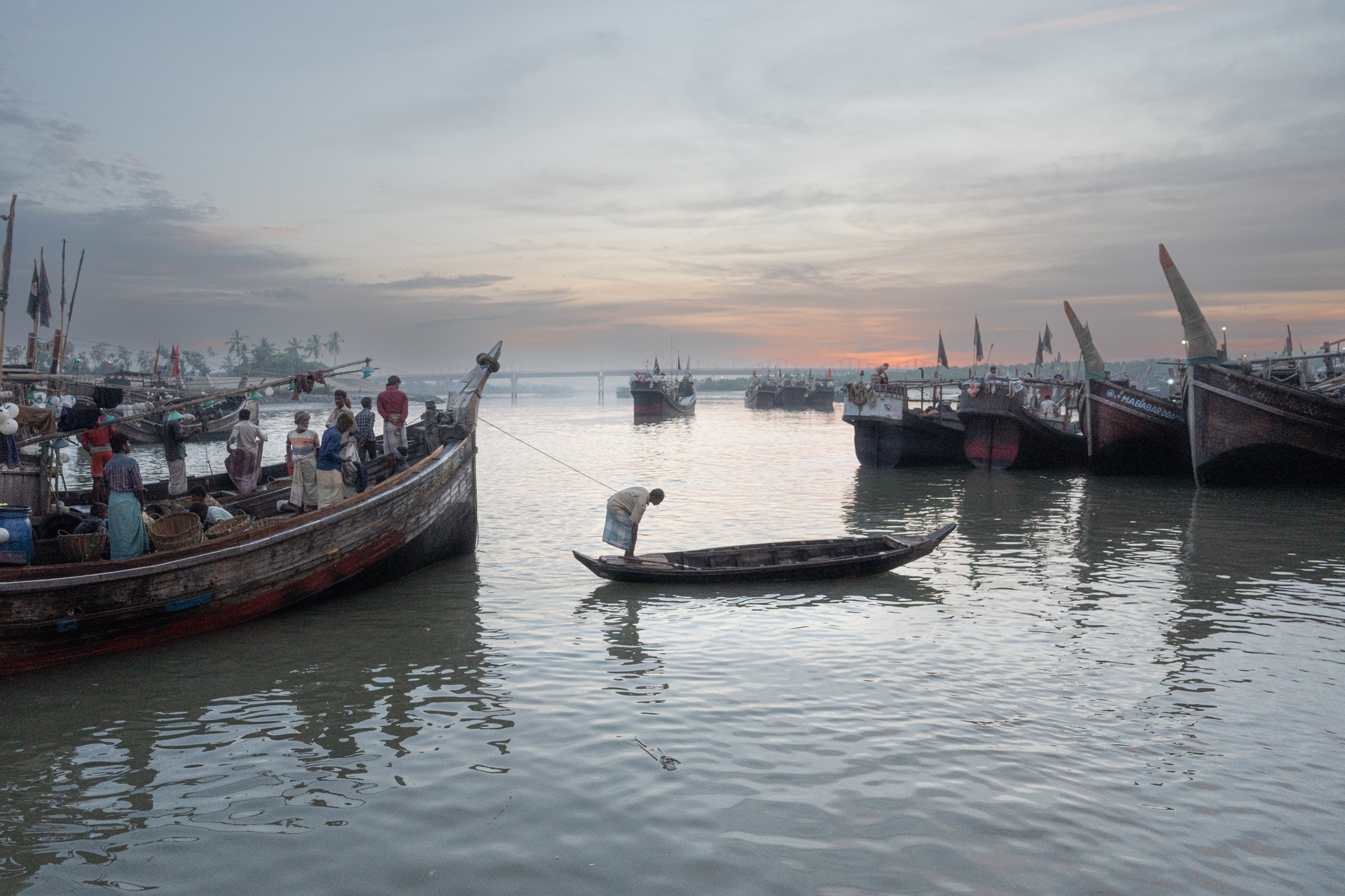
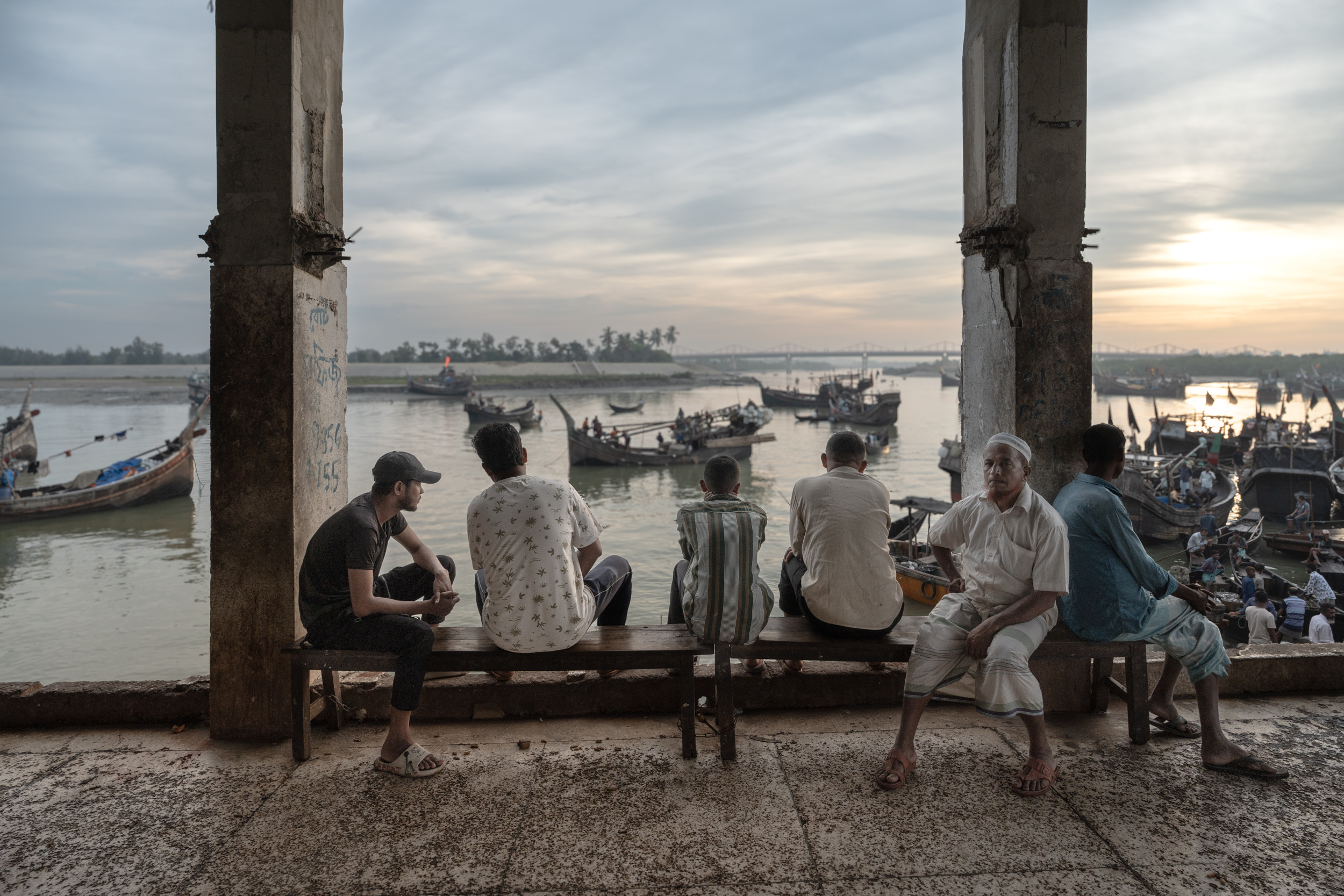
A Bangladesh photo tour anchored by the Thousand Candles festival, then far beyond Dhaka to tribes, river gypsies, floating markets, shipyards, brick kilns, wetlands, and Cox’s Bazar for nonstop, story-rich shooting.

Founded Nomad Photo Expeditions in 2009, bringing with him a practice rooted in people photography and cultural documentation. His work across remote destinations has been recognized repeatedly by leading international photography institutions, establishing a well-documented record of artistic and field excellence.

Roberto Pazzi is an award-winning travel photographer and co-leader of Nomad Photo Expeditions. A self-taught photographer who began his career as an engineer before dedicating himself fully to cultural storytelling. With over 60 destinations explored, his work is published in prominent international media and honored by distinguished photography organizations worldwide

Founded by Harry Fisch and led together with Roberto Pazzi, Nomad has spent all these years refining the art of photographic exploration. Exciting challenges in remote destinations are treated as opportunities, not setbacks — a direct result of accumulated experience, deep local knowledge, and sustained commitment to exceptional field delivery.

Beyond stunning locations, we secure uncommon access to people and places most visitors never reach. Through trusted local networks built over decades, we create entry points to remote villages, living traditions, and ordinary life — offering consistent opportunities to capture images of genuine cultural depth and lasting human significance.
We travel in small groups of 4–10 participants to preserve a more immersive and fulfilling experience. This encourages genuine engagement with each place and thoughtful photography, while providing individual coaching, meaningful feedback, and a respectful creative environment where every participant has the space and time to produce their best work.

 (855) 245-4205
 info@nomadphotoexpeditions.com
 Mon–Fri 08:30–17:00 (ACST)
This eleven-day tour departs in late October and runs into early November, timed to coincide with the Rakher Upobash “Thousand Candles” festival at Barodi, held on the Saturdays and Tuesdays of the final fifteen days of Kartik. This window also falls in the cooler, drier post-monsoon season, when the light is kinder for long days of street, river and market work. The 2027 departure is scheduled for 31 October to 10 November.
Most international visitors require a visa for Bangladesh, and a visa on arrival is available to many nationalities at Dhaka, though rules vary by passport and can change. We recommend confirming current requirements with your nearest Bangladeshi mission well before departure and carrying the supporting documents they request. Please note the visa is not included in the tour price, so the application and any associated fees are arranged and paid by each participant individually.
Bangladesh is generally welcoming to visitors, although local conditions may occasionally be influenced by political developments, demonstrations or transport disruptions. These situations are usually limited and manageable with appropriate planning. We continuously monitor reliable local and international sources, follow official guidance, and adjust arrangements when necessary to ensure a smooth, well-informed and carefully managed experience for all participants.
Your base for most of the trip is the four-star Grand Palace Hotel in Dhaka, where you stay in Super Deluxe or Deluxe rooms between excursions. During the southern leg at Cox’s Bazar you move to the Sea Palace Hotel, taking a Sea View room of similar four-star standard. Accommodation is based on double occupancy with private bath and air conditioning throughout. Hotels may be changed to another property of similar characteristics and quality, subject to availability and operational requirements at destination.
Ground travel is by private vehicle, with road transfers to sites around Dhaka such as Savar, Araihazar and Brahmanbaria, some of them three hours or more each way. Two internal flights are included in the price, carrying the group between Dhaka and Cox’s Bazar and back. At the coast and along the Buriganga you also move on and around boats. Early starts are common, with several departures between 5:30 and 6:30 in the morning to catch the best light.
This is a documentary journey rather than a trek, but it does keep a brisk pace. Expect frequent early mornings, time on your feet exploring markets, kilns, workshops and river jetties, and movement across uneven, sometimes crowded ground. You should be comfortable walking for a few hours at a gentle pace, standing for extended periods, and getting in and out of vehicles and boats unaided. There is no high altitude, but stamina and steady footing help you make the most of each day.
The focus stays firmly on people and the textures of their work. Highlights include the candlelit Rakher Upobash vigil at Barodi, hand-fired brick kilns at Savar, coal porters and ship-breaking along the Buriganga, shell-bangle and silver artisans in Old Dhaka, and the vast bamboo racks of the Nazirartek dry-fish zone. You also document textile-dyeing fields, Jamdani weavers, wholesale markets, a special-needs school, a madrassa, trackside communities and rice-drying yards — a constant flow of portraits, ritual and environmental scenes across city, river and shore.
The expedition is led by Harry Fisch and/or Roberto Pazzi, Nomad’s founder and his long-time co-leader, both award-winning travel photographers. You do not need to be experienced: itineraries are structured around photographic opportunities and a photography-focused schedule, with individual coaching and feedback along the way. Amateurs and seasoned professionals travel together comfortably, and non-photographers are welcome too, particularly when accompanying a partner. The aim is to help every participant produce their strongest work, whatever their starting point.
Harry Fisch is a world-recognized travel photographer who founded Nomad Photo Expeditions in 2011, leading small-group cultural photo tours across more than 50 countries. His acclaimed work has earned international honors—PX3 Gold in Paris, IPA Awards of Merit, a MIFA Bronze in Moscow, Grand Prix de la Découverte jury awards, Photoespaña and Lens Culture—celebrated worldwide for its human depth.
Roberto Pazzi is a world-recognized Italian travel photographer, an engineer-turned-expedition-leader who partners with Nomad Photo Expeditions across more than 60 destinations. His acclaimed work has earned global honors—2025 European Photography Awards Photographer of the Year, Smithsonian, PX3, TIFA Gold, MIFA, BIFA and New York Photography Awards—and reached publications worldwide including National Geographic, GEO, The Times and The Guardian.
The 2027 tour is priced at 7,900 US$ per person based on double occupancy, with a single-room supplement of 750 US$. Included are the workshop leader, all meals except on the first and last days, two internal flights, four-star and excellent local hotels with private bath and air conditioning, arrival and departure transfers, specified transport and activities, and gratuities for porterage, drivers and housekeeping. Not included are international flights, the visa, airline taxes, camera insurance, tips for guides, and personal extras such as drinks and laundry.
Rather than a sightseeing loop, this is a tightly curated documentary expedition built around genuine human encounters and a marquee festival few outsiders photograph. Years of fieldwork open doors to working environments — kilns, yards, markets, schools — where you photograph real labour and faith up close, with care and consent. A small group, a photography-driven schedule, and the on-the-ground experience of Harry Fisch and Roberto Pazzi mean you spend your time where the strongest pictures are, not queuing behind a coach party.
Nomad Photo Excpeditions deliberately keeps groups small — typically between four and ten participants depending on the trip — so the experience stays immersive and personal. That scale means more individual coaching, meaningful image feedback, and a respectful creative environment where everyone has the space and time to work a scene properly. Smaller numbers are also less intrusive in intimate settings such as a candlelit vigil, a classroom or a craftsman’s lane, letting you build the quiet rapport that authentic portraits require.
The itinerary grants entry to places and moments that are genuinely hard to reach alone. You photograph inside working brick kilns and the Keraniganj ship-repair yards, join the candlelit Rakher Upobash ritual at the Sri Sri Loknath ashram, and spend respectful time in a special-needs school, a madrassa and trackside communities. This access is built over years of repeat scouting and trusted local relationships rather than assembled from a generic catalogue, turning everyday Bangladeshi life into story-rich, consent-based photography.