
Jan. 06 - 15, 2027
$6,900
CRAFTED TO SURPASS EXPECTATIONS
Harry Fisch, founder of Nomad and a Prince in a Benin kingdom, brings relationship-based access that goes beyond formal permissions, and with small groups and adaptable schedules the journey creates time for meaning to surface naturally.

Founded Nomad Photo Expeditions in 2009, bringing with him a practice rooted in people photography and cultural documentation. His work across remote destinations has been recognized repeatedly by leading international photography institutions, establishing a well-documented record of artistic and field excellence.

Roberto Pazzi is an award-winning travel photographer and co-leader of Nomad Photo Expeditions. A self-taught photographer who began his career as an engineer before dedicating himself fully to cultural storytelling. With over 60 destinations explored, his work is published in prominent international media and honored by distinguished photography organizations worldwide

Founded by Harry Fisch and led together with Roberto Pazzi, Nomad has spent all these years refining the art of photographic exploration. Exciting challenges in remote destinations are treated as opportunities, not setbacks — a direct result of accumulated experience, deep local knowledge, and sustained commitment to exceptional field delivery.

Beyond stunning locations, we secure uncommon access to people and places most visitors never reach. Through trusted local networks built over decades, we create entry points to remote villages, living traditions, and ordinary life — offering consistent opportunities to capture images of genuine cultural depth and lasting human significance.
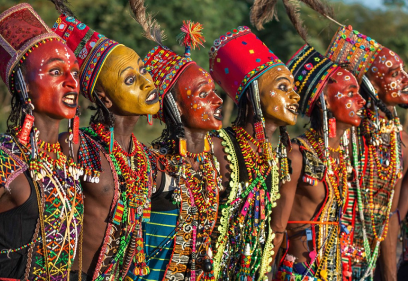
We travel in small groups of 4–10 participants to preserve a more immersive and fulfilling experience. This encourages genuine engagement with each place and thoughtful photography, while providing individual coaching, meaningful feedback, and a respectful creative environment where every participant has the space and time to produce their best work.

 (855) 245-4205
 info@nomadphotoexpeditions.com
 Mon–Fri 08:30–17:00 (ACST)
Our greatest strength is access that few conventional operators can offer. This tour was curated by Harry Fisch, who in January 2023 was enthroned as Prince and Minister of the Kingdom of Angolin in Benin — and with good fortune, we may be received by the King. Those relationships, built with priests, elders, and nomadic communities over many years, open doors no standard itinerary reaches: animist ceremonies, Fulani camps, and Holi villages. Combined with very small groups of four to eight and experienced photographer-leaders, that access is reflected in the roughly 70% of Nomad clients who return for further expeditions.
Most foreign visitors need a visa for Benin, and many nationalities can obtain the Benin e-Visa online before travel. The optional Ghana extension requires a separate Ghanaian visa, which generally must be arranged in advance. Visas are not included in the tour price, and requirements can change, so please confirm the current rules for your nationality and allow time for processing well ahead of departure.
Benin is generally considered a stable and welcoming country for travelers who take normal precautions, and our small groups move with experienced local guides throughout. The main practical considerations are the crowds and intensity of the Voodoo Festival, busy urban traffic in Cotonou, the heat, and ordinary food and water hygiene. The Ghana extension is equally straightforward with sensible care. Comprehensive travel and medical insurance is essential and is not included in the tour price.
On the Benin and Ghana photo tour you stay in good, comfortable hotels selected for their location close to the festivals, sacred sites, and communities you photograph — from Cotonou and Ouidah on the coast to Abomey, Possotomé, and the towns of the interior. In more remote stretches, such as the Agonlin foothills and the lakeside villages, properties are simpler, with the priority being proximity to the subjects rather than luxury. Rooms are based on double occupancy, and a limited number of single rooms are available for a supplement.
Local transport on the Benin tour is mainly by private air-conditioned vehicles with experienced local drivers, with domestic flights bridging the longer distances between regions. When 4x4 vehicles, each participant enjoys a window seat. Large buses.
The Benin and Ghana tour is moderate rather than strenuous. You should be comfortable walking for two to three hours at a gentle pace with regular breaks, standing for stretches during ceremonies, and managing steps, cobblestones, and uneven ground. Festival days begin early and can be long, hot, and busy, and some village visits and the Ganvié boat outing involve getting on and off vehicles and dugouts unassisted. They suit travelers who are reasonably fit and adaptable to variable conditions.
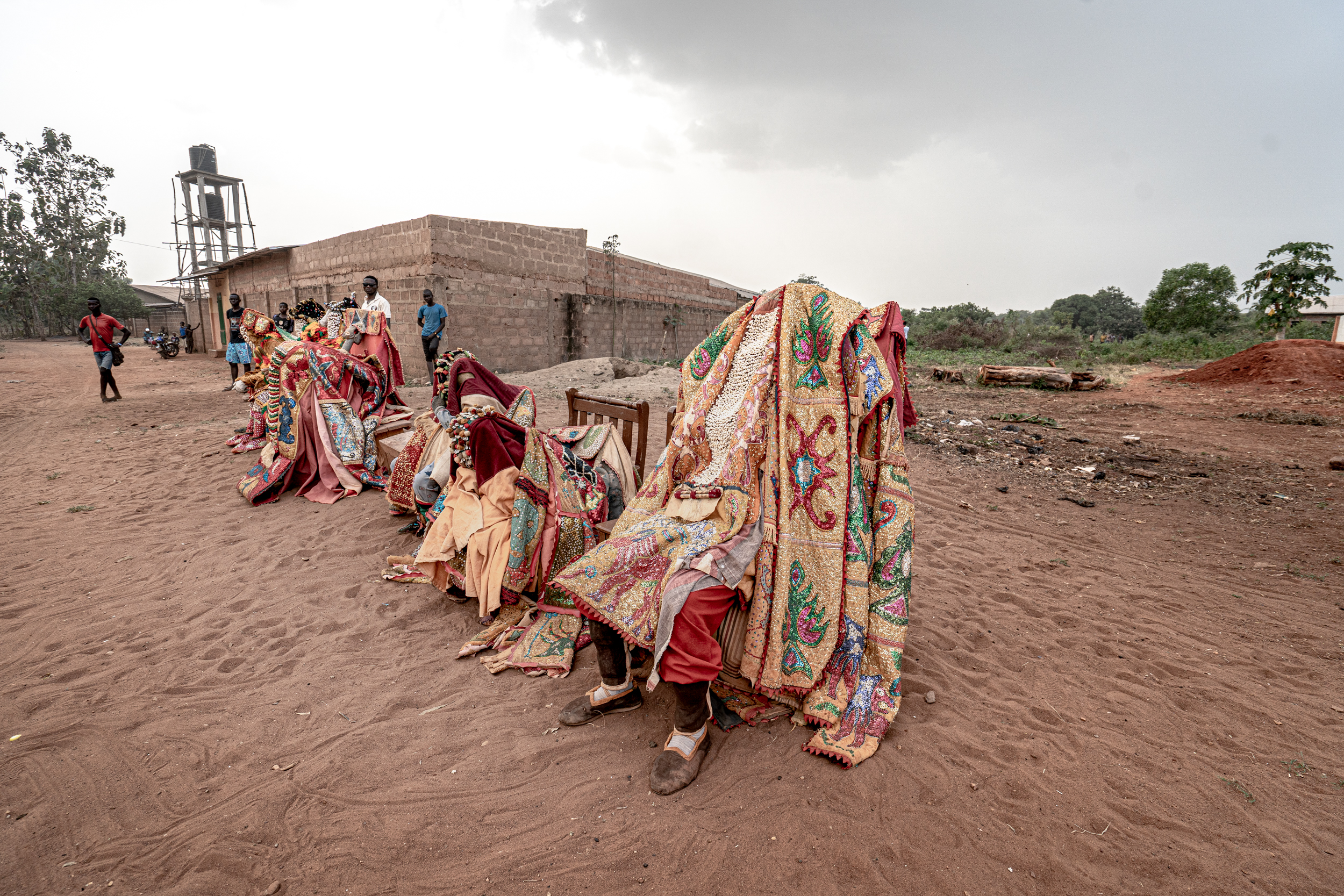
You’ll photograph some of West Africa’s most extraordinary cultural moments: the great Voodoo Festival procession at Ouidah, white-painted ritual dancers, spinning straw fetishes and griots performing at the Gate of No Return, and animist ceremonies at Lake Aheme. Beyond the festival you reach Fulani nomad camps in the red-earth Agonlin foothills, the facial-tattooed Holi communities near Ketou, the stilt city of Ganvié on Lake Nokoué, the royal palaces of Abomey, and Atlantic fishermen at work. The focus is on living ritual and real people.
The Benin photo tour is led by Nomad founder Harry Fisch and/or Roberto Pazzi, and they welcome all levels, from amateurs to working professionals. With groups kept to 4–10 participants, there’s room for individual coaching and feedback, and non-photographers are welcome, particularly when accompanying a partner.
Harry Fisch is a world-recognized travel photographer who founded Nomad Photo Expeditions in 2011, leading small-group cultural photo tours across more than 50 countries. His acclaimed work has earned international honors—PX3 Gold in Paris, IPA Awards of Merit, a MIFA Bronze in Moscow, Grand Prix de la Découverte jury awards, Photoespaña and Lens Culture—celebrated worldwide for its human depth.
Roberto Pazzi is a world-recognized Italian travel photographer, an engineer-turned-expedition-leader who partners with Nomad Photo Expeditions across more than 60 destinations. His acclaimed work has earned global honors—2025 European Photography Awards Photographer of the Year, Smithsonian, PX3, TIFA Gold, MIFA, BIFA and New York Photography Awards—and reached publications worldwide including National Geographic, GEO, The Times and The Guardian.
The main nine-day Benin itinerary is 6,900 US$ per person, based on double occupancy, with a 500 US$ single-room supplement. The optional five-day Ghana extension is 3,640 US$, with a 250 US$ single supplement. Included are tuition from Harry Fisch and/or Roberto Pazzi, all breakfasts, lunches and dinners except the first and last days, private photo sessions, good hotels, all local private ground transport, and airport transfers. International flights, visas, tips, drinks, and insurance are not included.
Choose this tour if you want privileged access and individual guidance over standard sightseeing: small 4–10 groups mean real shooting room at crowded festivals and a number of private events arranged specifically for the group rather than public itineraries. Smaller numbers also allow the pace to adapt to the light and the unfolding of each ceremony.
This tour reaches events and communities that are effectively impossible to arrange on your own — entering the heart of the Voodoo Festival through a guide who is himself an acolyte, audiences with high priests at Bopa and Lake Aheme, and trusted visits to Fulani and Holi villages. That access rests on years of cultivated relationships, including Harry’s own standing within the Kingdom of Angolin, rather than a generic operator catalogue. Its depth shows in client loyalty, with some participants having joined more than a dozen Nomad expeditions.