Jun. 25 - Jul. 06, 2027
$9,800
CRAFTED TO SURPASS EXPECTATIONS
What sets this apart is not the route, but the access: Tenganan's pre-Hindu rituals, Bromo's Tenggerese ceremonies, and Solo's puppet masters, secured through cultural alignment no conventional tour achieves.

Founded Nomad Photo Expeditions in 2009, bringing with him a practice rooted in people photography and cultural documentation. His work across remote destinations has been recognized repeatedly by leading international photography institutions, establishing a well-documented record of artistic and field excellence.

Roberto Pazzi is an award-winning travel photographer and co-leader of Nomad Photo Expeditions. A self-taught photographer who began his career as an engineer before dedicating himself fully to cultural storytelling. With over 60 destinations explored, his work is published in prominent international media and honored by distinguished photography organizations worldwide

Founded by Harry Fisch and led together with Roberto Pazzi, Nomad has spent all these years refining the art of photographic exploration. Exciting challenges in remote destinations are treated as opportunities, not setbacks — a direct result of accumulated experience, deep local knowledge, and sustained commitment to exceptional field delivery.

Beyond stunning locations, we secure uncommon access to people and places most visitors never reach. Through trusted local networks built over decades, we create entry points to remote villages, living traditions, and ordinary life — offering consistent opportunities to capture images of genuine cultural depth and lasting human significance.
We travel in small groups of 4–10 participants to preserve a more immersive and fulfilling experience. This encourages genuine engagement with each place and thoughtful photography, while providing individual coaching, meaningful feedback, and a respectful creative environment where every participant has the space and time to produce their best work.

 (855) 245-4205
 info@nomadphotoexpeditions.com
 Mon–Fri 08:30–17:00 (ACST)
This twelve-day journey through Bali and Java runs in late June and early July, scheduled for 25 June to 6 July 2027, during the drier season that suits long days of cultural photography. Conditions vary with the terrain: Bali sits at sea level with warm temperatures around 27–30°C, while the highlands of Mount Bromo can drop to a cool 8–18°C, so layered clothing is useful. The timing is built around a sequence of ceremonies and exclusive performances rather than a single festival date.
Many nationalities can enter Indonesia on a visa on arrival or an electronic visa on arrival, typically valid for a short tourist stay and extendable, though eligibility and fees depend on your passport. As rules change periodically, we recommend confirming the current requirements before you travel and ensuring your passport has sufficient validity. The visa is not included in the tour price, so each participant arranges and pays for their own entry permit and any extension separately.
Bali and Java are popular, well-equipped destinations that are generally safe for visitors, and you travel throughout with the Nomad Photo Expedition team, local guides and dialect-speaking guides who ease communication. The main things to plan for are practical: a tropical climate, strong sun, and meaningful swings in temperature and altitude as you move from coastal Bali to Mount Bromo at around 2,300 metres. Sensible footwear for temple grounds and uneven volcanic terrain, sun protection, and warm layers for the highlands keep you comfortable.
Accommodation is in attractive four-star hotels, with each property chosen for its setting along the route. You stay at Kuwarasan A Pramana Experience Resort in Ubud, Ramayana Resort in Karangasem, the Lava View near Mount Bromo, Alila Solo, Tentrem in Yogyakarta and Sudamala in the seaside town of Sanur. Listed hotels may be substituted for others of similar or higher category. Rooms are based on double occupancy, with a reasonably-priced single-room supplement for those who prefer to room alone.
Ground travel uses a comfortable Toyota Hi Ace coach with a separate SUV carrying the luggage, linking the cultural sites of Bali and Java by road. A domestic flight connects Bali to Surabaya for the East Java leg, and another returns you to Bali at the end, with these local flights booked on your behalf but not included in the price. Several days begin before dawn for sunrise sessions, so early starts and scenic drives are part of the rhythm.
The trip is moderate in its demands. You should be comfortable with early starts for sunrise shoots, walking through temple grounds, villages and artisan workshops, and managing uneven volcanic terrain around Mount Bromo. Altitude reaches roughly 2,300 metres in the Bromo highlands, where it is noticeably cooler, while the rest of the itinerary is warm and at low elevation. There is no strenuous trekking, but reasonable fitness, steady footing and comfortable footwear help you make the most of each location.
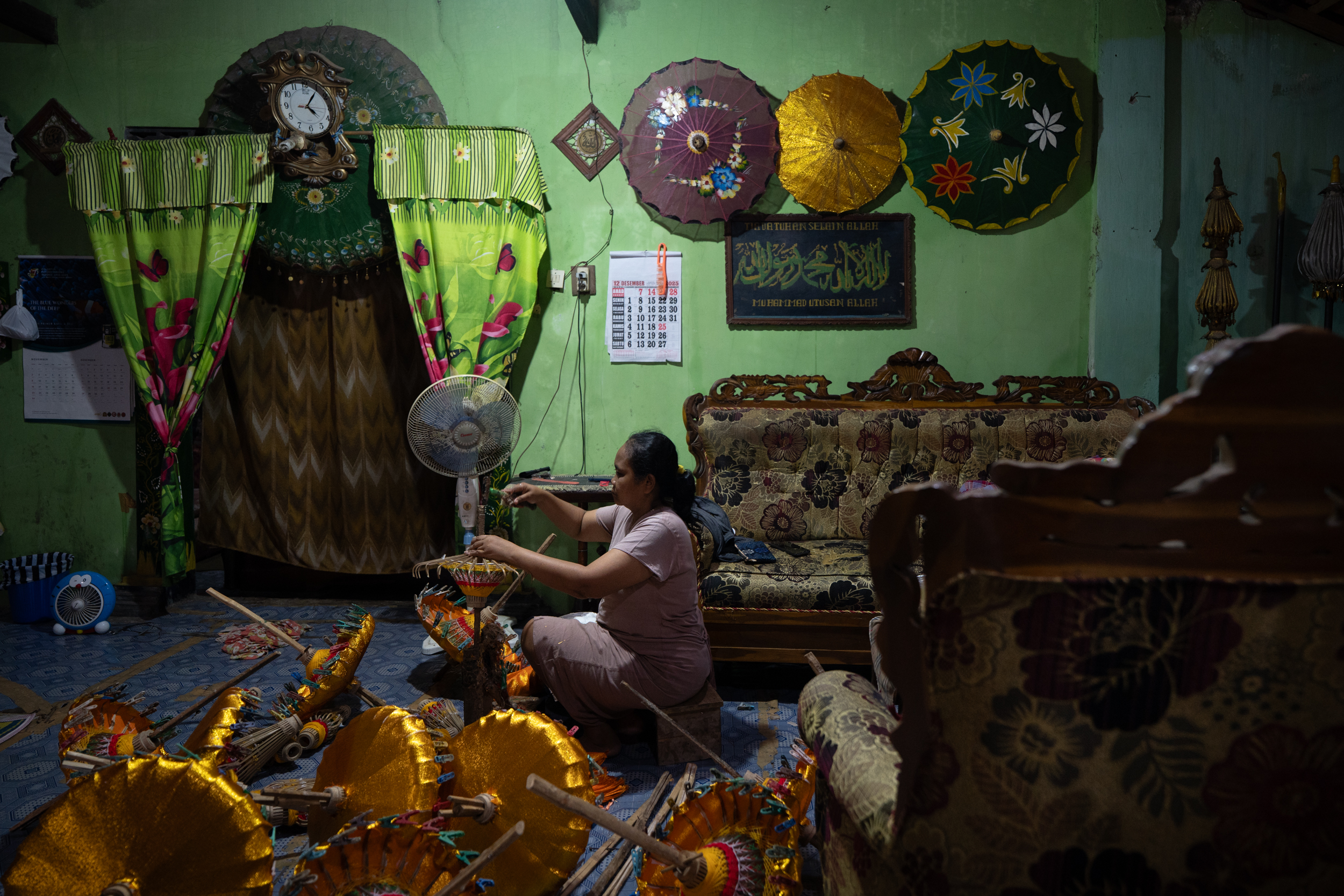
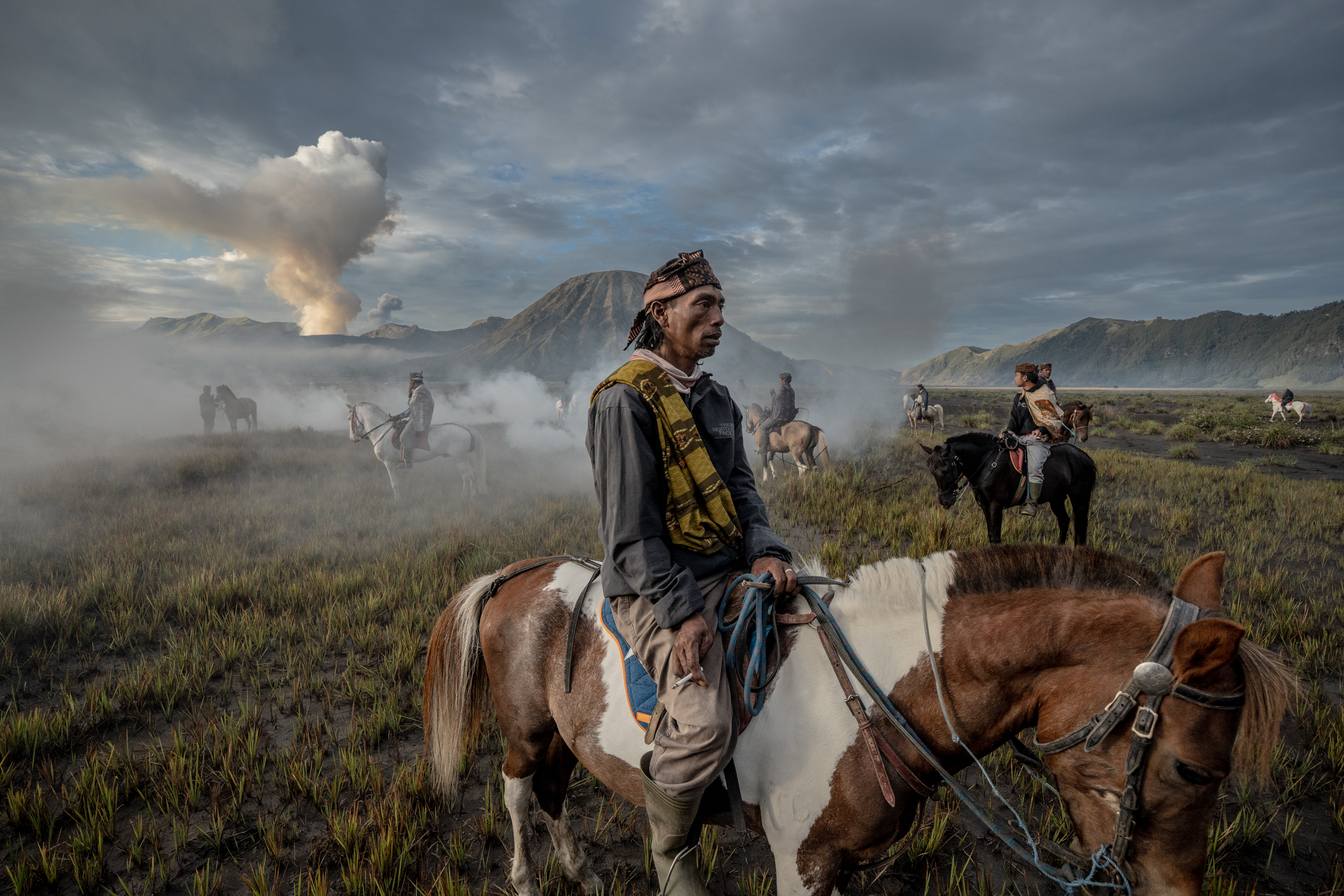
The itinerary is a sequence of cultural set pieces. In Bali you photograph the nighttime Sacred Fire Horse Dance, the Sacred Rejang in staged and candid sessions, and the old village of Tenganan. In East Java you capture the Tengger people and the 20 Horsemen of Tengger riding across Bromo’s caldera at sunrise. Java adds Wayang shadow-puppet makers, batik artisans, gong forging, keris daggers, the sunrise at Borobudur and a dramatic evening of Javanese opera — a constant mix of portrait, documentary and landscape work.
The expedition is led by Roberto Pazzi or Harry Fisch, both internationally awarded travel photographers, supported by an English-speaking guide and two dialect-speaking guides who help you connect with local communities. No prior experience is necessary: the days are structured around photographic opportunities, with staged and documentary sessions designed to suit a range of abilities. Amateurs and seasoned professionals travel comfortably together, with hands-on coaching throughout, and non-photographers are welcome too, particularly when accompanying a partner.
Harry Fisch is a world-recognized travel photographer who founded Nomad Photo Expeditions in 2011, leading small-group cultural photo tours across more than 50 countries. His acclaimed work has earned international honors—PX3 Gold in Paris, IPA Awards of Merit, a MIFA Bronze in Moscow, Grand Prix de la Découverte jury awards, Photoespaña and Lens Culture—celebrated worldwide for its human depth.
Roberto Pazzi is a world-recognized Italian travel photographer, an engineer-turned-expedition-leader who partners with Nomad Photo Expeditions across more than 60 destinations. His acclaimed work has earned global honors—2025 European Photography Awards Photographer of the Year, Smithsonian, PX3, TIFA Gold, MIFA, BIFA and New York Photography Awards—and reached publications worldwide including National Geographic, GEO, The Times and The Guardian.
The tour is priced at 9,800 US$ per person on double occupancy, with a single-room supplement of 400 US$. Included are twelve days and eleven nights in four-star hotels, the photographer-leader, all meals except two on your own, ground transfers with a coach and luggage SUV, airport pick-up, an English-speaking guide and two dialect-speaking guides, plus permits such as the Rejang photographer pass and Bromo photo permit and the listed entrance fees. Not included are local flights of around 277 US$, international flights, the visa, travel insurance, tips and personal expenses.
This is built around respectful, prearranged access to spectacular ceremonies rather than crowded tourist viewpoints. Exclusive sessions — a private Sacred Fire Horse Dance, dedicated Sacred Rejang portrait sittings, the 20 Horsemen of Tengger at sunrise, and a full opera troupe’s transformation from first makeup to performance — are arranged for photographers, with the necessary permits handled for you. Combined with carefully chosen four-star stays, a small group, and the experience of Roberto Pazzi and Harry Fisch, it turns Indonesia’s living culture into richly staged and documentary imagery.
Nomad keeps the group small, with a maximum of eight participants on this trip, so the experience stays immersive and personal. That scale means individual coaching, meaningful feedback on your images, and a calm, respectful presence during intimate ceremonies and private sessions where a large group simply would not fit. It also allows time to work each scene properly — from a dancer’s portrait to the dawn light over Bromo — rather than rushing between stops on a fixed coach itinerary.
A great deal of this trip depends on arranged, photographer-only access. You document young girls dressing inside a private home before a festival, a private Sacred Fire Horse Dance, exclusive Sacred Rejang portrait sessions across traditional villages, and the 20 Horsemen of Tengger at sunrise on Bromo’s sea of sand. In Java you join artisans — puppet, batik, gong, keris and umbrella makers — and an opera troupe through its full transformation, with permits and introductions in place that would be very hard, and expensive, to secure alone.