 Only 6 Spots Left
Only 6 Spots Left
Only 6 Spots Left

Turkey, hidden provinces
8,950 US$18 Sep 2027
What stands behind this photographic experience? Our photographic and cultural journey is designed to immerse us in daily life and human interaction rather than monuments. Here we have access to hidden courtyards, family-run coffee houses, and aging mansions. We will visit people in their authentic environments, villagers in Harran’s conical houses, artisans in Mardin and […]
HIGHLIGHTS
- Urfa Bazaars & Street Life.- Walk crowded alleys, greet merchants, taste spices, and witness daily negotiations that define the city’s rhythm.
- Harran’s Conical Houses.- Enter beehive homes, meet farming families, and learn how climate and tradition shape work and community.
- Hidden Courtyards & Coffee Houses.- Sit for tea with hosts, hear local stories, and slow down inside quiet spaces usually closed to outsiders.
- Mardin Stone Architecture.- Narrow lanes, step through arches, and look out over the plain while neighbors go about everyday routines.
- Private Equine Session in Mardin.- Share time with a local handler and horse, hear the backstory, and experience how animals and town life connect.
- Midyat Artisans & Telkari.- Watch silversmiths at their benches, learn the steps of the craft, and speak with families who keep the trade alive.
- Diyarbakır Ulu Mosque & Hasan Paşa Hanı.- Move between prayer, trade, and conversation inside historic courtyards where residents meet, rest, and do business.
- Kurdish Mountain Villages.- Visit homes, join simple meals, and see the pace of village life shaped by seasons and family ties.
What stands behind this photographic experience?
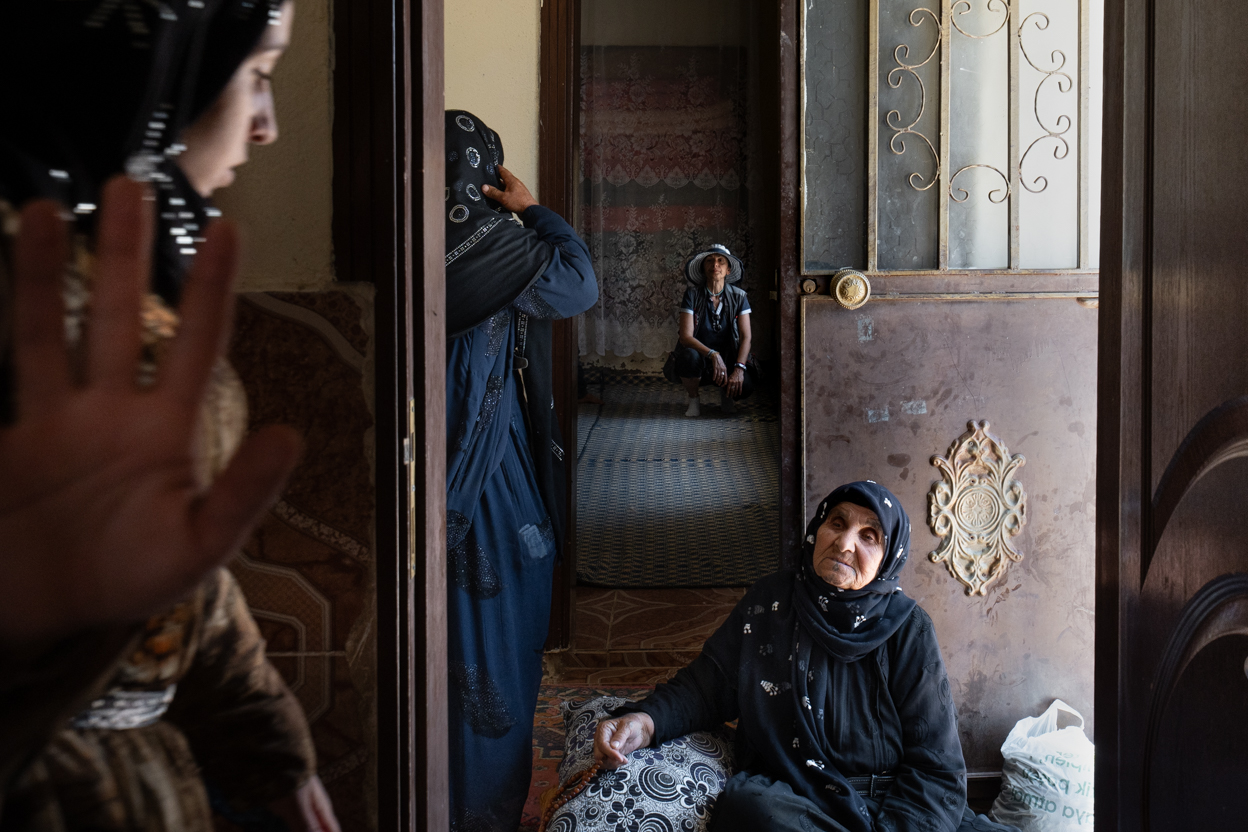
Our photographic and cultural journey is designed to immerse us in daily life and human interaction rather than monuments. Here we have access to hidden courtyards, family-run coffee houses, and aging mansions. We will visit people in their authentic environments, villagers in Harran’s conical houses, artisans in Mardin and Midyat, traders in Urfa’s bazaars and Kurdish families in the mountain villages of Bitlis and Hizan.
In Urfa and Harran, we meet Arab and Kurdish families whose ancestors settled here centuries ago, when this area was part of ancient Mesopotamia. The Arabs, often descendants of tribes that migrated north from Syria, keep a strong Islamic identity and traditional lifestyle.
Men wear patterned keffiyeh headscarves and long shirts or loose trousers, while women, especially in rural zones, dress in layered, vividly colored fabrics with sequined veils. Their homes are simple but well-kept, and hospitality remains essential: every guest is greeted with tea, smiles, and a seat of honor.
In Mardin and Midyat, the population becomes more diverse. Alongside Muslims—both Arabs and Kurds—live Syriac Christians, one of the oldest Christian communities in the world. Their ancestors have been here since the first centuries after Christ, and their churches and monasteries still preserve services in Aramaic, the language once spoken by Jesus. Syriac women are discreet and elegant, often wearing long black dresses and scarves, while the men are known for their calm, dignified demeanor. Many of them work as skilled silversmiths, continuing the ancient “telkari” filigree tradition.
Kurdish communities, spread throughout Diyarbakır, Bitlis, and the highlands of Hizan, form the cultural backbone of this region. Their origins go back to the Indo-Iranian tribes that settled in the Zagros mountains thousands of years ago. Kurds are known for their pride, resilience, and strong family bonds. Men wear distinctive baggy trousers (shalvar), wide belts, and patterned scarves; older men often carry prayer beads. Women in villages favor bright dresses, embroidered waistcoats, and headscarves that vary in color according to marital status or region. Most Kurds are Sunni Muslims, though their religious practice often blends Islam with ancient pre-Islamic customs tied to nature and community life.
In the mountain villages of Bitlis and Hizan, life remains close to tradition. The people are farmers and shepherds, conservative but open to visitors who show respect. Their faces are sun-weathered, their gestures quiet, and their pace unhurried. Even without words, communication flows easily through hospitality—a meal shared, bread broken, or tea poured by the fire.
My trip with Harry was an experience beyond anything I could imagine. The locations and itinerary are extremely well thought out and organized to maximize your photographic opportunities. Harry’s advice and approaches to evaluating a scene and working your subject were invaluable. It took me outside of my comfort zone culturally and technically and as a result, I returned with some of the most dramatic and moody photographs in my collection.
Mike Benford United States
ITINERARY
DAY 1 – SEPTEMBER 18, FRIDAY – ARRIVAL IN ISTANBUL
Arrival at Istanbul Airport. Transfer to the hotel and rest after the journey. Evening at leisure to adjust to the rhythm of the expedition.
Photographic Opportunities:
Arrival scenes, first impressions of Istanbul’s urban energy, and the quiet atmosphere of the evening in the historic city.
Night in Istanbul
DAY 2 – SEPTEMBER 19 – ISTANBUL TO URFA
Early morning flight to Urfa. Upon arrival, we begin our photographic exploration of the city’s vibrant streets. Urfa’s sprawling bazaar is a living organism of colors, textures, and human stories—men at work, women in traditional dresses, craftsmen shaping copper, and the aroma of spices filling the narrow alleys.
Photographic Opportunities:
Street portraits, market life, textile and spice details, and daily interactions that capture the deep-rooted traditions of southeastern Turkey.
Night in Urfa
DAY 3 – SEPTEMBER 20 – URFA VILLAGES AND HARRAN
After breakfast, we travel to nearby villages and the ancient city of Harran—an extraordinary site with its conical mud-brick houses and millennia-old heritage. We will photograph rural life, shepherds guiding their flocks, and the geometric beauty of Harran’s architecture under the Anatolian sun.
Photographic Opportunities:
Rural portraiture, architectural compositions of Harran’s domed houses, and timeless scenes of agrarian life.
Night in Urfa
DAY 4 – SEPTEMBER 21 – URFA TO MARDIN
After breakfast, we drive from Urfa to Mardin, stopping along the way for landscape and roadside photography. The journey takes us through semi-desert valleys and ancient caravan routes. Upon arrival, we explore Mardin’s labyrinthine streets—stone façades, arched passages, and terraces overlooking the Mesopotamian plains. In the afternoon, a private photo session with a horse model in one of the narrow streets brings cinematic atmosphere to our day.
Photographic Opportunities:
Architectural textures, golden-hour light over the Mesopotamian horizon, portraits in traditional stone alleys, and the private equine photo shoot that merges elegance and local charm.
Night in Mardin
DAY5-SEPTEMBER 22 - MIDYAT AND MARDIN
After breakfast, we continue to Midyat, a town of ancient stone houses, carved wooden doors, and Syriac heritage. We spend the day photographing its lively streets and artisans working in silver and filigree. Afternoon return to Mardin for a quiet evening surrounded by its architectural splendor.
Photographic Opportunities:
Silver workshops, candid portraits, architectural symmetry, and intimate cultural interactions reflecting centuries of coexistence between Christian and Muslim communities.
Night in Mardin
DAY 6 – SEPTEMBER 23 – MARDIN TO DIYARBAKIR
After breakfast, we drive to Diyarbakır. Our day begins at the Great Ulu Mosque—one of Anatolia’s oldest mosques, a masterpiece of basalt stone architecture. We then continue to Hasan Paşa Hanı, a 16th-century Ottoman caravanserai alive with tea vendors, tradesmen, and local families. The city’s fortified walls, its markets, and the rhythm of everyday life will occupy our lenses until evening. Dinner in a traditional restaurant before resting at our hotel.
Photographic Opportunities:
Architectural photography at Ulu Mosque, life in historic inns, documentary-style street portraits, and low-light evening photography capturing the city’s atmosphere.
Night in Diyarbakır
DAY 7 – SEPTEMBER 24 – DIYARBAKIR TO BITLIS AND HIZAN VILLAGES
After breakfast, we continue toward Bitlis, a city surrounded by mountains and known for its stone-built architecture. We will photograph its ancient streets and the fortress before heading to the remote villages of Hizan. Here, we spend the afternoon with local families, documenting agricultural life, fieldwork, and daily routines that seem untouched by time.
Photographic Opportunities:
Mountain landscapes, portraits of villagers, traditional rural homes, and authentic moments of life in the Anatolian highlands.
Night in Bitlis or in Hizan
DAY 8 – SEPTEMBER 25 – BITLIS TO VAN / FLIGHT TO ISTANBUL
After breakfast, we drive toward Van, with possible stops along Lake Van for panoramic photography. Late in the day, we fly back to Istanbul.
Photographic Opportunities:
Scenic views of Lake Van, reflections on water and sky, farewell portraits, and final impressions of Anatolia.
Night in Istanbul
DAY 9 – SEPTEMBER 26 – DEPARTURE
After breakfast, transfer to the airport for the international flight home, marking the end of our journey through southeastern Turkey’s cultural heartlands.
| Prices per person | |
|---|---|
| 8-10 Participants | 8,950 US$ |
| Supplements | |
|---|---|
| Single Room Supplement Main Trip | 850 US$ |
WHAT'S INCLUDED
The maximum number of participants is listed under "Maximum Group" in the Price section of each individual workshop. However, we reserve the right to add by up to one the maximum number of participants per workshop at any time.
Prices are per person, based on double occupancy. A limited number of single-occupancy rooms is available for an additional charge.
We reserve the right to amend prices of unsold tours at any time and correct errors in the prices of confirmed tours. Under our General Terms, confirmed tour prices may rise in specific cases.
Included
- - Led by Harry Fisch and/or , Roberto Pazzi .
- - 9 days 8 nights accommodations
- - Good 4 stars hotels, local hotels, a few charming guest houses
- - All meals except two on your own
- - Local Flight Istanbul-Urfa , Van-Istanbul
- - All inland transfers and special minivans in the cities
- - Airport pick-up and transfer
- - Hotel pick-up and transfer to airport
- - English speaking guide
- - Local Photographer assistant
- - Private Photo Session of locals with traditional dresses
- - Private Photo Sessions with horses
Not Included
- - International Flights
- - Travel insurance
- - Tips for the guides
- - Personal expenses
- - Extras at the hotels, minibar, etc...
- - Alcoholic and soft drinks.
DEPOSIT & CANCELLATION FEES:
A deposit of $1000 per person is required to guarantee your reservation, which will be applied towards the cost of your tour. Full payment due 60 days before departure.
FITNESS LEVEL, TRAVEL CONDITIONS:
Level 1: Moderate
You will need to be able to walk for a few hours ( 2-3 hours) at a gentle pace, with regular breaks -most of the time taking pictures , remain standing, and get on and off coaches, planes, and trains unassisted.
You will also need to be able to climb several flights of stairs and navigate steps and uneven terrain walking for a short time over more difficult terrain (e.g. cobblestones, city hills, stairs without handrails, limited or no access to elevators). Excursions require standing and walking to city centers where coaches are prohibited.
Some long touring days with occasional full-day motor coach excursions.
Appropriate for: Travelers who are in good physical condition fit and comfortable with longer days of touring (both walking tours and coach time).