
Nov. 11 - 18, 2026
$11,900
CRAFTED TO SURPASS EXPECTATIONS
Our experience with Papua New Guinea's goes far beyond festivals. We visit the tribes at their own places, on their own terms, and travel deep to reach markets few outsiders ever witness. Expert local guidance, deep preparation, earned community respect, and an unwavering commitment to your safety make that genuine access possible.


Founded Nomad Photo Expeditions in 2009, bringing with him a practice rooted in people photography and cultural documentation. His work across remote destinations has been recognized repeatedly by leading international photography institutions, establishing a well-documented record of artistic and field excellence.

Roberto Pazzi is an award-winning travel photographer and co-leader of Nomad Photo Expeditions. A self-taught photographer who began his career as an engineer before dedicating himself fully to cultural storytelling. With over 60 destinations explored, his work is published in prominent international media and honored by distinguished photography organizations worldwide

Founded by Harry Fisch and led together with Roberto Pazzi, Nomad has spent all these years refining the art of photographic exploration. Exciting challenges in remote destinations are treated as opportunities, not setbacks — a direct result of accumulated experience, deep local knowledge, and sustained commitment to exceptional field delivery.

Beyond stunning locations, we secure uncommon access to people and places most visitors never reach. Through trusted local networks built over decades, we create entry points to remote villages, living traditions, and ordinary life — offering consistent opportunities to capture images of genuine cultural depth and lasting human significance.
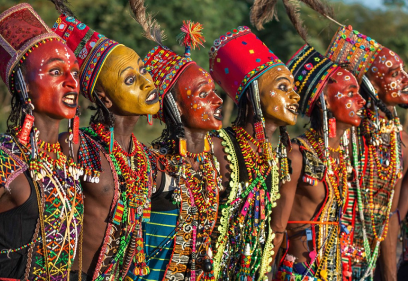
We travel in small groups of 4–10 participants to preserve a more immersive and fulfilling experience. This encourages genuine engagement with each place and thoughtful photography, while providing individual coaching, meaningful feedback, and a respectful creative environment where every participant has the space and time to produce their best work.

 (855) 245-4205
 info@nomadphotoexpeditions.com
 Mon–Fri 08:30–17:00 (ACST)
This expedition departs 11 to 18 November 2026, an eight-day, seven-night itinerary timed to bring you into the Highlands when tribal singsing gatherings can be arranged. November places you among the Huli, Melpa, Skeleton and Asaro Mudmen performers in good photographic conditions, though Papua New Guinea’s weather and rugged roads always call for flexibility. The same November dates are offered again in 2027, and an optional Kokopo extension follows the main tour for those wanting more.
Most visitors need a visa for Papua New Guinea, available through the official entry system or on arrival depending on your nationality, alongside a passport valid at least six months. Visas, air taxes and airport taxes are not covered by the tour price, so plan for these yourself. Because entry rules and health requirements can change, confirm the current regulations with an official source before you book international flights, and keep documentation ready for your domestic connections.
Papua New Guinea can present safety challenges, and you are advised to stay informed and follow government travel advisories; participants sign an informed-consent document before departure. Healthcare is inconsistent outside Port Moresby and pharmaceuticals may be scarce, so bring personal medication and comprehensive insurance. That said, you travel in a tiny group of no more than four with Roberto Pazzi and experienced local guides, on a route built from years of trusted relationships that prioritise your wellbeing and comfort.
Accommodation mixes good hotels with basic but comfortable eco lodges, all keeping consistent standards. In Port Moresby you stay at the Hilton, around Mount Hagen at the Mc Royal Hotel, in Simbu at the immersive Mindima Eco Lodge close to the Skeleton tribe, and near Goroka at Pacific Gardens Hotel. Specific properties may vary with similar alternatives. Most meals are included throughout, except on arrival and departure days, leaving you well placed for early starts.
You move by spacious, air-conditioned vehicles for road transfers along the Highlands Highway, plus domestic flights linking Port Moresby and Mount Hagen. The single local flight costs roughly 420 dollars, is paid on booking and is not included, and your team arranges it. Note that only one airline serves the region, with a history of delays and occasional cancellations, so the schedule is built with buffers. Expect long, sometimes rough drives through rural areas demanding patience and flexibility.
The tour is rated Level 3, Active, for travellers who are physically fit and used to long days with some exertion. Days begin early and can end late, taking you into remote, rugged country with uneven ground and steep ascents and descents. At times you walk uphill and downhill through genuine forest to reach villages and performances. No technical trekking is required, but stamina, sure footing and a flexible attitude toward shifting logistics will serve you well.
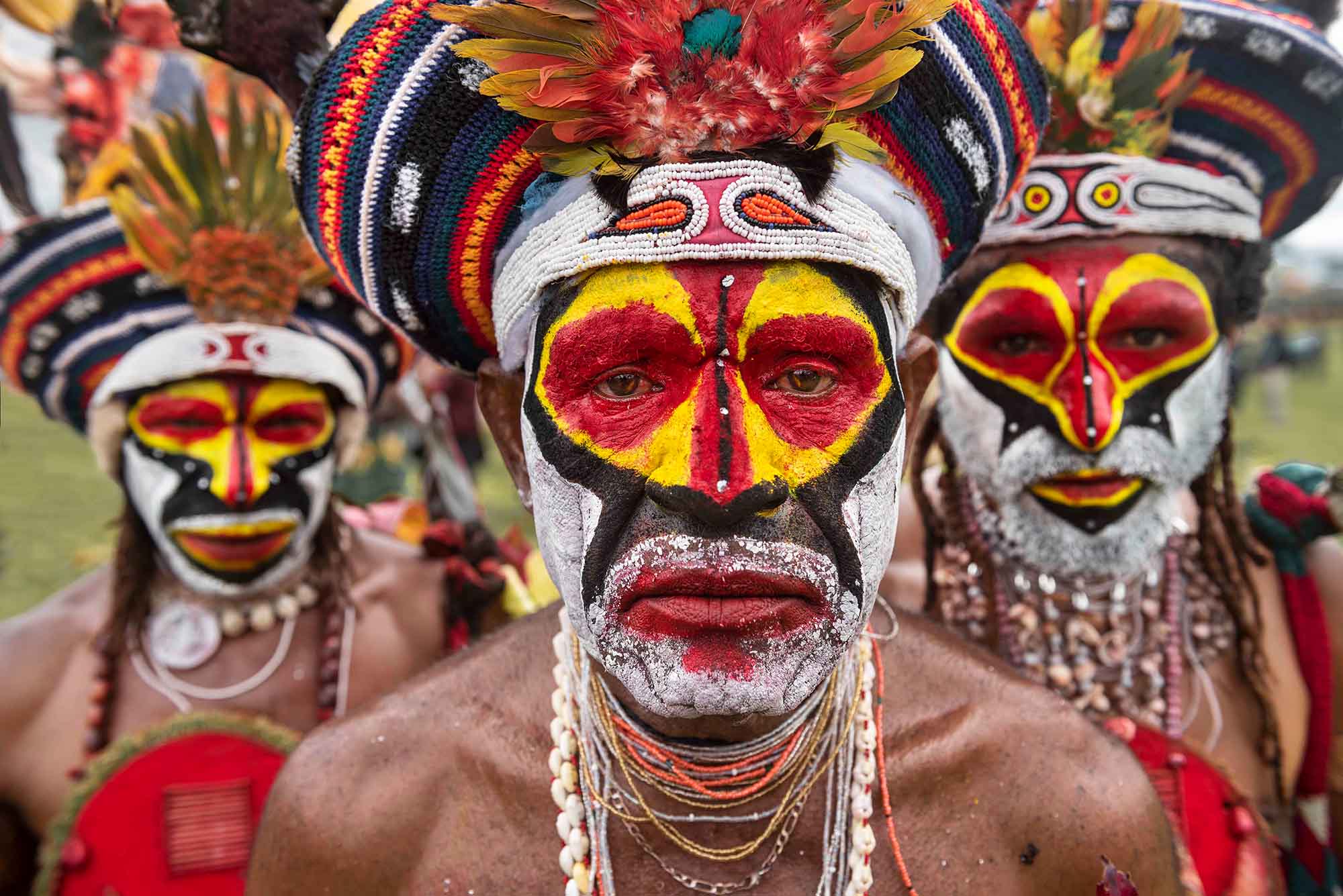
You photograph the Highlands’ extraordinary tribes: the Urup Kaip clans, face-painted Melpa, the bone-painted Simbu Skeleton dancers, ochre-blazed Huli Wigmen and the haunting clay-masked Asaro Mudmen. A private singsing gathering brings multiple groups close for unique frames, and you document courtship ceremonies, women’s initiation rites and traditional mumu earth-oven cooking. Beyond portraits, there are lush rainforests, misty mountains, Mount Hagen’s market, birds of paradise and Port Moresby’s street and museum scenes, every encounter approached with authenticity over spectacle.
The expedition is led by award-winning photographer Roberto Pazzi, who brings years of local relationships and a respectful, patient approach to every encounter. You do not need to be an expert; photographers of all levels gain from his guidance on capturing compelling, narrative-driven images in the field. With a maximum of four participants, attention is highly personal, and Pazzi helps you hone technique while reading each situation so you come away with both strong pictures and real understanding.
Harry Fisch is a world-recognized travel photographer who founded Nomad Photo Expeditions in 2011, leading small-group cultural photo tours across more than 50 countries. His acclaimed work has earned international honors—PX3 Gold in Paris, IPA Awards of Merit, a MIFA Bronze in Moscow, Grand Prix de la Découverte jury awards, Photoespaña and Lens Culture—celebrated worldwide for its human depth.
Roberto Pazzi is a world-recognized Italian travel photographer, an engineer-turned-expedition-leader who partners with Nomad Photo Expeditions across more than 60 destinations. His acclaimed work has earned global honors—2025 European Photography Awards Photographer of the Year, Smithsonian, PX3, TIFA Gold, MIFA, BIFA and New York Photography Awards—and reached publications worldwide including National Geographic, GEO, The Times and The Guardian.
The tour is 11,900 US dollars per person for 3 to 4 participants, based on double occupancy, with a 700-dollar single-room supplement. Included are tour leader Roberto Pazzi, airport reception, spacious air-conditioned transport, accommodation at the Hilton and comparable hotels and lodges, all meals except arrival and departure days, all visits and an expert guide. Not included are international flights, the roughly 420-dollar local flight, tipping, personal extras, visas, and air and airport taxes. The Kokopo extension costs 6,200 dollars.
This is an immersion, not a festival visit: there are no bleachers, tourist queues or performances staged purely for cameras. Led by Roberto Pazzi, every encounter favours authenticity over spectacle, built on handpicked locations and years of trusted local relationships that grant access no guidebook can promise. A private singsing gathering puts you unusually close to the dancers, and the tiny group lets you engage genuinely with one of the last places where ancient cultures still breathe with full vitality.
With a maximum of just four participants, this is among the most intimate ways to photograph the Highlands. Standard tours herd large groups to set performances; here, small numbers and trusted relationships secure close, personal access and the flexibility to adapt as tribal agreements and daily conditions shift. You stand near enough to feel the kundu drum, work each subject unhurried, and receive direct coaching from Roberto Pazzi rather than competing with a crowd for the same frame.
Every tribal interaction depends on a specific agreement to perform, negotiated through long-standing local relationships rather than something an independent traveller could organise. The trip includes a private, exclusive singsing gathering of multiple Highlands groups, the Huli Wigmen among them, plus invitations to courtship and initiation ceremonies and shared mumu feasts. Handpicked locations, an expert ground team and Roberto Pazzi’s years of return visits mean you reach communities and moments far beyond the standard circuit’s reach.