DAY 1 – 18 FEBRUARY – ARRIVE DELHI
Our journey begins with arrival at Delhi International Airport, where assistance awaits on the ground. Transfer to the hotel follows — rooms are available from 14:00 hrs on this day. There are no formal activities scheduled for the evening, making this an ideal moment to settle, prepare photographic equipment, review the days ahead, and attune to the rhythms of India before nine days of immersive cultural and tribal exploration begin in earnest.
Accommodation: Pride Plaza Aerocity, Delhi – Deluxe Room
Meals: No
DAY 2 – 19 FEBRUARY – DELHI TO BHUBANESWAR . MEET THE MAHIMA MONKS
Early morning transfer to Delhi airport to board Air India flight (Baggage allowance: 15 kg checked, 7 kg hand luggage.) On arrival in Bhubaneswar, we drive directly to Dhenkanal Palace for check-in — approximately 70 km / 2 hours.
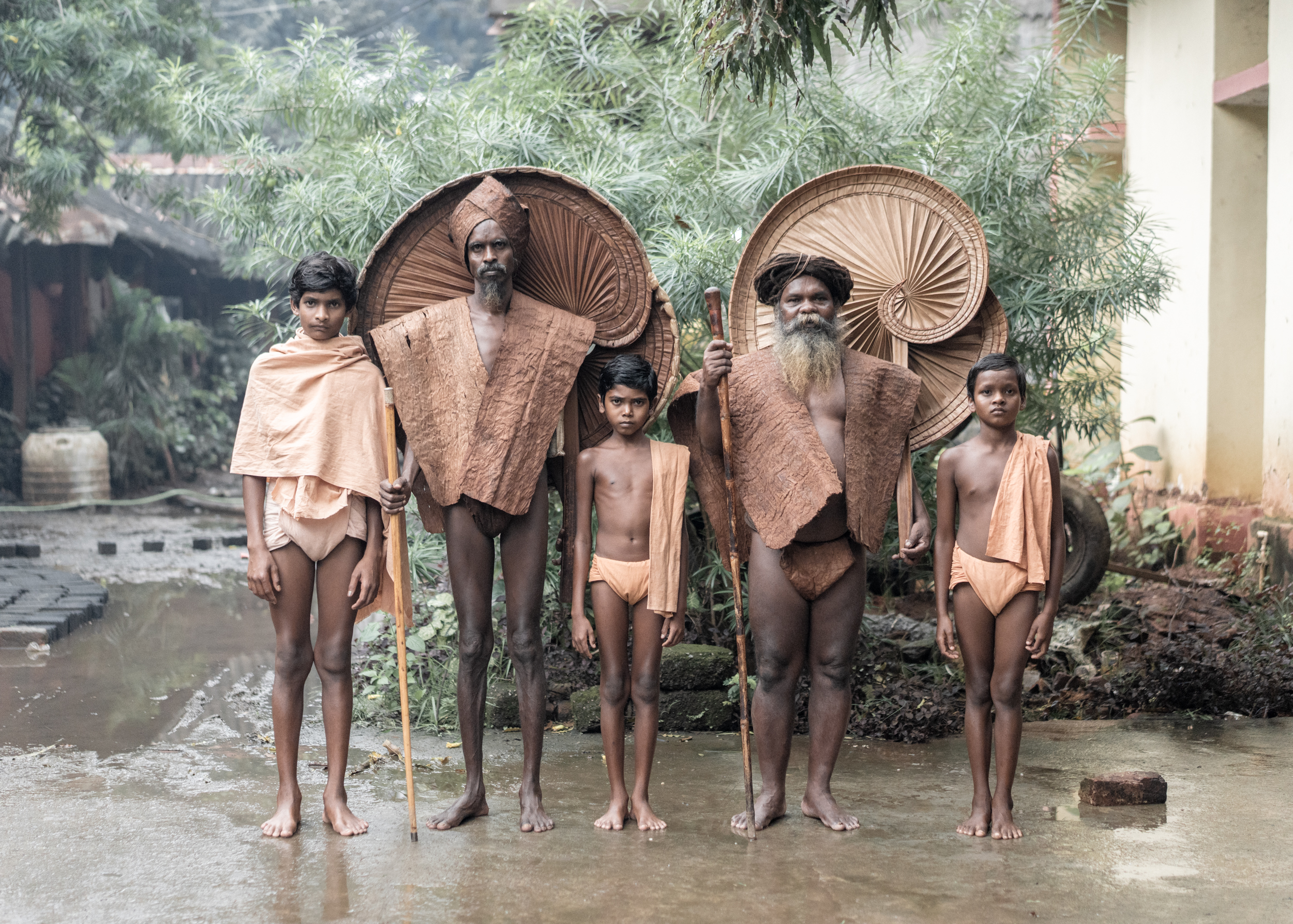
Afternoon is given to exploring the local village near the palace. Late afternoon, we drive one hour to Joranda to meet the monks of the Mahima cult — a 19th-century spiritual movement that combines elements of Sanatan tradition, Jainism, and Buddhism. The Mahima cult believes in a single formless divine power called 'Alekh Brahma,' rejects idol worship and caste distinctions, and promotes equality, simplicity, and universal brotherhood. Unlike conventional Hindu practice, no statues or images are worshipped. We attend the monks' evening rituals in the monastery and temples before returning to Dhenkanal for the night.
Photographic Opportunities:
The Joranda monastery at dusk: monks in plain robes, sacred fire catching weathered faces, altar spaces deliberately empty of imagery — form and devotion in their purest visual state. Portraits of sadhus in the candid warmth of evening prayer, and the local village scenes on approach to the palace.
Accommodation: Dhenkanal Palace, Dhenkanal – Standard Room
Meals: Breakfast, Lunch, Dinner
DAY 3 – 20 FEBRUARY – JORANDA FESTIVAL
After breakfast, full-day excursion to witness the Joranda Festival. This is a major spiritual gathering of Mahima Dharma followers, celebrated at Magha Purnima in honour of the formless divine Alekh Brahma. Hundreds of monks, ascetics, and devotees assemble at the Mahima Gadi to perform prayers and sacred fire rituals, creating a deeply spiritual atmosphere charged with chants and devotion.
The festival reflects the teachings of Mahima Gosain — equality, simplicity, and universal brotherhood — and for the cultural photographer it represents one of Odisha's most visually powerful events. Striking images of saffron-clad sadhus, sacred fires, traditional rituals, and vibrant pilgrim gatherings unfold across the day. The play of firelight during evening ceremonies, the expressions of devotion, and the texture of community life in worship create a deeply affecting documentary sequence.
Photographic Opportunities:
Saffron-robed sadhus against bare-altared walls, sacred fire ceremonies at golden hour, close-range portraits of devotees in prayer, the mass gathering at the Mahima Gadi — intense light, concentrated faces, the visual drama of deep conviction in spare surroundings.
Accommodation: Dhenkanal Palace, Dhenkanal – Standard Room
Meals: Breakfast, Lunch, Dinner
DAY 4 – 21 FEBRUARY – DHENKANAL TO PHULBANI
After breakfast, we drive to Phulbani. En route, we stop in Sadeibaruni to visit a Dhokra casting village — home to the Ghantara tribal people, whose artisans practice the ancient lost-wax process to create intricate brass figurines, jewelry, and handicrafts. We observe the craftspeople at work in their village workshops, with the opportunity to try the technique firsthand.
Continuing the drive, we visit the textile villages of Nuapatna and Maniabandh, renowned for traditional Silk Ikat — a tie-and-dye weaving technique practiced on small handlooms to produce textiles celebrated for their intricate designs and vibrant colors. Skilled weavers demonstrate every stage of the process. On arrival in Phulbani, check-in to hotel.
Photographic Opportunities:
Hands shaping wax over clay, the pour of molten brass, cooling metal forms in the Sadeibaruni workshops — process photography at its most elemental. In Nuapatna and Maniabandh: dyed silk skeins in natural light, loom mechanics in motion, and weaver portraits against the geometric patterns of their own textiles.
Accommodation: Hotel K.P. Salunki, Phulbani – Standard Room
Meals: Breakfast, Lunch, Dinner
DAY 5 – 22 FEBRUARY - PHULBANI TO BALANGIR VIA KUTIA KONDH VILLAGES
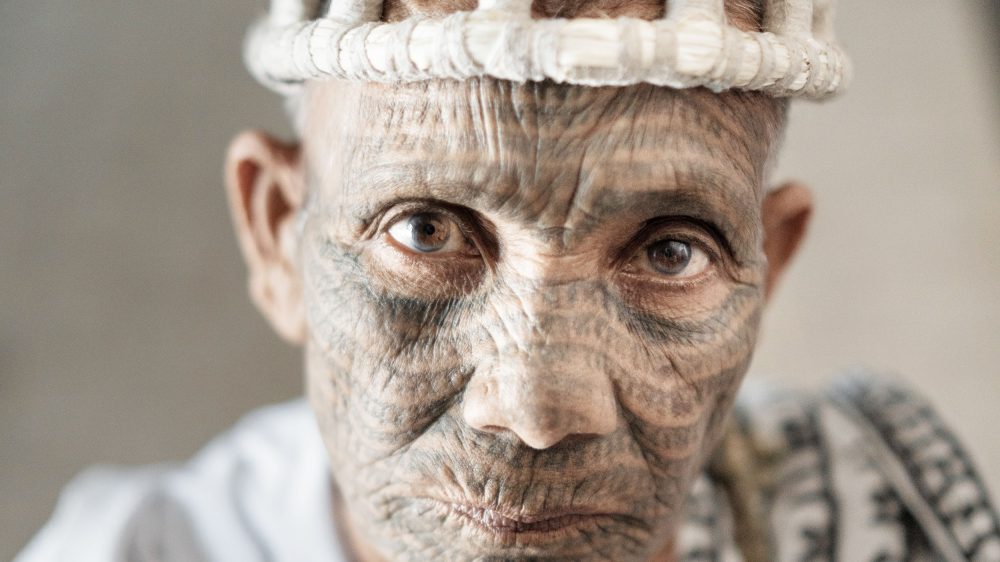
After breakfast, we visit the villages of the Kutia Kondh — one of three sub-groups of the major Kondh tribe (alongside the Desia Kondh and Dongaria Kondh). The Kutia Kondh are distinguished by full facial tattoos, a cultural identity marker of profound significance. Their history includes the Meria Sacrifice — a ritual offering to the Earth Goddess for better harvests — a practice that defined their relationship to the land for generations.
Their villages are scattered through deep forest, where large wood logs form the structure and fencing of homes, reflecting a way of life in close symbiosis with the surrounding forest. The landscape itself is part of the portrait. After lunch, drive approximately 190 km / 4 hours to Balangir. On arrival, check-in to hotel.
Photographic Opportunities:
Full facial tattoos of Kutia Kondh women and elders — among the rarest and most compelling portrait subjects in all of tribal India. The log-and-wood architecture of forest settlements, domestic scenes within village compounds, traditional ornament and dress in natural light, and the forest surroundings as context for each frame.
Accommodation: Hotel Park Land, Balangir – Standard Room
Meals: Breakfast, Lunch, Dinner
DAY 6 – 23 FEBRUARY – BALANGIR TO SHIVRINARAYAN VIA DESIA KONDH & GOND VILLAGES
After breakfast, drive to Shivrinarayan. En route, we pass through tribal villages of the Desia Kondh and the Gond — two distinct indigenous communities with contrasting visual identities.
The Desia Kondh share cultural roots with the Kutia Kondh but differ in attire and the absence of facial tattoos, though hand tattoos are present. As skilled forest-dwellers, they display remarkable adaptability to their environment alongside a distinct handicraft tradition.
The Gond are one of Chhattisgarh's largest and most prominent indigenous communities, residing primarily in the southern Bastar region. They practice agriculture and forest gathering and are celebrated for Gond painting — a complex traditional folk-art form of intricate pattern and symbolic language — as well as for a deep spiritual relationship with nature. On arrival in Shivrinarayan, check-in to hotel.
Photographic Opportunities:
Gond painting in practice — pigment, pattern, and the painters at work in village settings. Desia Kondh women with hand-tattoo detail, traditional dress, and village architecture in forest light. Two neighboring tribal identities offering contrasting photographic registers within a single drive.
Accommodation: Raghav Inn, Shivnaryanpur – Deluxe Room
Meals: Breakfast, Lunch, Dinner
DAY 7 – 24 FEBRUARY – SHIVRINARAYAN: RAMNAMI SAMAJ
A full day dedicated to the villages of the Ramnami Samaj — a devotional community living primarily in Chhattisgarh, along the Mahanadi River. Their defining practice: tattooing the name 'Ram' across every inch of their bodies using special ink. Those covered entirely are known as Purnanakshik. They also wear shawls printed with the name Ram and headgear made of peacock feathers.
Their devotion is total — it led them to teach themselves to read and write in order to study the Ramcharitmanas, and from that foundation they developed their own musical and clothing traditions. The day is organized for our group to participate in a community gathering and to witness and document their cultural rituals — an arrangement that gives us rare access to this extraordinary community.
Photographic Opportunities:
Ram's name tattooed across every surface of skin and fabric — among the most visually extraordinary portrait subjects in India. Peacock-feather crowns in close detail, communal chanting in village courtyards, devotional expressions at every age, and the layered visual density of tattooed faces, inscribed shawls, and ritual dress in natural light.
Accommodation: Raghav Inn, Shivnaryanpur – Deluxe Room
Meals: Breakfast, Lunch, Dinner
DAY 8 – 25 FEBRUARY– SHIVRINARAYAN TO RAIPUR VIA RAJIM KUMBH MELA
After breakfast, drive toward Raipur. En route — 45 km before the city — we stop at Rajim to witness the Rajim Kumbh Mela, one of Chhattisgarh's most significant spiritual gatherings.
The festival is held at the sacred Triveni Sangam of the Mahanadi, Pairi, and Sondur rivers, celebrated around Maghi Purnima. Thousands of devotees, saints, and pilgrims converge for a sacred river dip believed to purify the soul and bring spiritual blessings. The mela fills with devotional chants, religious discourses, and evening aarti along the riverbanks. For the documentary photographer, the scenes are remarkable: colorful processions, ash-covered sadhus, warm lamp-glow reflected on moving water, and the expressions of faith among the crowd. Continuing to Raipur for overnight stay at Mayfair Lake Resort.
Photographic Opportunities:
Ash-covered sadhus at the Triveni Sangam, mass bathing scenes, lamp-lit aarti on the Mahanadi at dusk, colorful devotional processions, and fire reflections on the sacred confluence — a sequence of light, movement, and devotion across the full arc of the day.
Accommodation: Mayfair Lake Resort, Raipur – Club Room
Meals: Breakfast, Lunch, Dinner
DAY 9 – 26 FEBRUARY – RAIPUR–RAJIM–DELHI (DEPARTURE)
A final morning drive back to Rajim — approximately 90 km / 2 hours round trip — for a last session at the Rajim Kumbh Mela. Morning light on the Triveni Sangam is the most luminous hour for riverbank photography: pilgrims in devotional stance, the early mist lifting off the water, sadhus beginning their rituals at the confluence.
After lunch, drive to Raipur airport to board IndiGo flight 6E 5349 to Delhi (ETD 17:55 / ETA 19:55 hrs). Baggage allowance: 15 kg checked, 7 kg hand luggage. On arrival in Delhi, participants connect independently to their outward international flights. End of services.
Photographic Opportunities:
Morning light on the Triveni Sangam — the day's most luminous hour for mela photography. Pilgrims in early devotional stance, last portrait sessions, the quieter side of the festival before the crowd builds. Final frames of an extraordinary journey before the drive to Raipur airport.
Accommodation: No (Departure Day)
Meals: Breakfast, Lunch