DAY 01 – MONDAY: ARRIVAL IN ADDIS ABABA
We arrive in the bustling capital of Ethiopia, Addis Ababa. After a warm welcome, we head straight to our hotel to drop off our luggage before setting off on a full day of discovery. This city, whose name means “new flower,” unfolds at 2,500 meters above sea level, combining the chaos of modernity with touches of deep tradition. Our journey begins with a scenic drive up to the Entoto Mountains, where we take in sweeping views over the capital. We then descend to visit St. George’s Church, one of the most emblematic religious sites in the country.
Lodging.- Best Western Hotel or similar
DAY 02 – TUESDAY: ADDIS ABABA – JINKA (FLIGHT) – HANA MURSI (BODI)
As we travel through the rugged terrain, we encounter men decorated with symbolic paint, scarifications, and traditional ornaments etched with history. Continuing west, we reach Hana Mursi, home of the Bodi. We arrive at a traditional village where we set up camp and spend the evening engaging with the community at dusk. The night wraps us in the silence of the valley, and the early morning promises more moments of cultural immersion.
The Bodi: Known for their traditional lifestyle and close connection with nature. They have maintained their traditions and customs over the years, which has helped preserve their unique culture, such as their famous New Year ceremony, Ka’el, in which a select group competes by drinking cow’s blood and milk to gain as much weight as possible over six months. The winner becomes a hero of the tribe for the rest of his life. Despite pressures from modernization and land changes, they have preserved their traditional way of life. Their strong sense of identity is reflected in their rituals, body scarification, and oral traditions.
Photographic opportunities: Close-up portraits of Bodis men and women; expressive details of body paint, scarification, and lip plates; dusty landscapes; golden-hour village scenes; candid camp moments under natural light.
Lodging.- Night in Our Camp.
DAY 03 – WEDNESDAY: BODI – MAJI – TULQUI
After breakfast, we break down our camp and set out once again, traveling along rough dirt roads with only occasional paved stretches. As we cross the Omo River bridge, we drive past wide expanses of sugarcane plantations and industrial factories. Leaving these behind, the terrain shifts dramatically—lush vegetation begins to blanket the hills as we steadily ascend toward the highlands.
We make a brief stop in Maji to stretch and regroup, then continue through Diz territory, passing the small towns of Tum and Koca. Along the way, we pass fields of corn, sorghum, and false banana, thriving in the fertile highland soil. A road detour leads us deeper into Suri territory, and by late afternoon, we reach Tulqui—a remote and peaceful location ideal for setting up camp.
The Suri: Known to themselves as Dama or Dhuak, the Suri number approximately 32,000 and share strong linguistic ties with the Mursi. Their livelihood revolves around cattle, which represent their principal wealth, followed by agriculture.
Culturally resilient, they fiercely protect their ancestral customs. Suri women are internationally recognized for their clay and gourd discs, inserted into their lips and ears beginning around age twenty. These ornaments are gradually increased in size and play a key role in marriage arrangements—the larger the plate, the higher the dowry in cattle. Between November and February, young men engage in Donga—ritual stick fighting that offers prestige and marital prospects. The Suri also express themselves through striking body art: they paint their entire bodies with chalk and ochre, and then, using their fingertips, remove the paint to create hypnotic geometric patterns.
Photographic Opportunities: Expansive mountain landscapes; candid moments along the road; traditional agriculture; portraits of Suri with body paint; dramatic stick-fighting poses (when possible); the intimate environment of the campsite.
Lodging.- Night in Our Camp.
DAY 04 – THURSDAY: TULQUI – KIBISH – TULQUI
After breakfast, we make a short 19 km drive to Kibish, the administrative center of the Suri territory. This is a day dedicated to deepening our cultural experience. Accompanied by Suri guides—whose presence eases interaction—we walk into their villages and observe everyday life.
We search for a nearby river where the men often gather completely nude to paint their entire bodies with ash and mud in a powerful form of tribal expression.
In the villages, we meet women with large lip plates made of clay or wood. Most have had their lower teeth removed to accommodate the disc. From a young age, girls begin by inserting wooden pegs that are gradually replaced with larger plates, reaching up to 30 cm in diameter. After an enriching day, we return to Tulqui.
Photographic Opportunities: Portraits of Suri villagers in their environment; body-painting rituals at the river; close-ups of lip plates and jewelry; riverside scenes with natural light; guided interactions enabling respectful, close-range photography.
Lodging.- Night in Our Camp.
DAY 05 – FRIDAY: TULQUI – KIBISH – MAJI
Following breakfast, we dismantle our camp once more and begin our journey toward Maji. The road unfolds with ever-changing scenery, taking us through isolated highland landscapes. Upon arrival in Maji, we venture into nearby Dezi villages.
We are hosted for the night in the home of Protestant missionaries—an American family who founded a humble and welcoming base here. Full board.
Photographic Opportunities: Highland landscapes under shifting light; traditional Dezi dwellings; interactions in a domestic setting; storytelling portraits; evening scenes in the village and surrounding nature.
DAY 06 – SATURDAY: MAJI – OMO NATIONAL PARK
After an early breakfast, we embark on a long and remote journey into the heart of Omo National Park. While official wildlife protection exists, much of the animal population has sadly disappeared. Still, we push on into this nearly forgotten terrain. Though the park is poorly documented, in 1999 it was home to large herds of topis, hartebeests, zebras, buffalo, waterbucks, and even some hippos. We set up camp in this wild and silent land. Full board and overnight stay in the park.
Photographic Opportunities: Raw wilderness and untouched nature; minimalist landscapes; chances of spotting wildlife—buffalo, waterbucks, antelopes; remote bush scenes and camp atmosphere under the stars.
Lodging.- Night in Our Camp.
DAY 07 – SUNDAY: OMO N.P. – KANGATE – MURLES – TURMI
We continue our journey toward Kangate, a small town inhabited by the Nyangatom. Here, we make visits to remote villages where we can engage directly with this semi-nomadic group.
Afterward, we proceed toward the Murles, originally from South Sudan and now resettled after five decades back into Ethiopia. After visiting their communities, we continue 79 km to reach Turmi, the land of the Hamer. The Murle are a Nilotic ethnic group originally from South Sudan, now also present in Ethiopia’s remote southwestern border regions. Traditionally agro-pastoralists, they rely on cattle herding and seasonal farming, with a culture rich in scarification and body adornment. We arrive in time for a meal and a short rest before heading out at sunset to begin our first contact with the Hamer people.
The Nyangatom (Bumes): This group of around 30,000 people lives between the Omo and Kibish Rivers. Their language belongs to the Nilo-Saharan family and is related to Toposa and Turkana. Though semi-nomadic, they practice agriculture and raise livestock, and regularly migrate in search of pasture.
According to their traditions, they descend from the Karimojong and come from northern Nigeria. They began cultivating sorghum near the Omo and Kibish rivers and adopted their current semi-nomadic lifestyle, in which they leave their usual residences only during the dry season to move with their herds to areas with better pasture, approximately from November to February. Along the banks of the Omo River, many Nyangatom families have settled, and although they raise some livestock, their main activity has become agriculture.
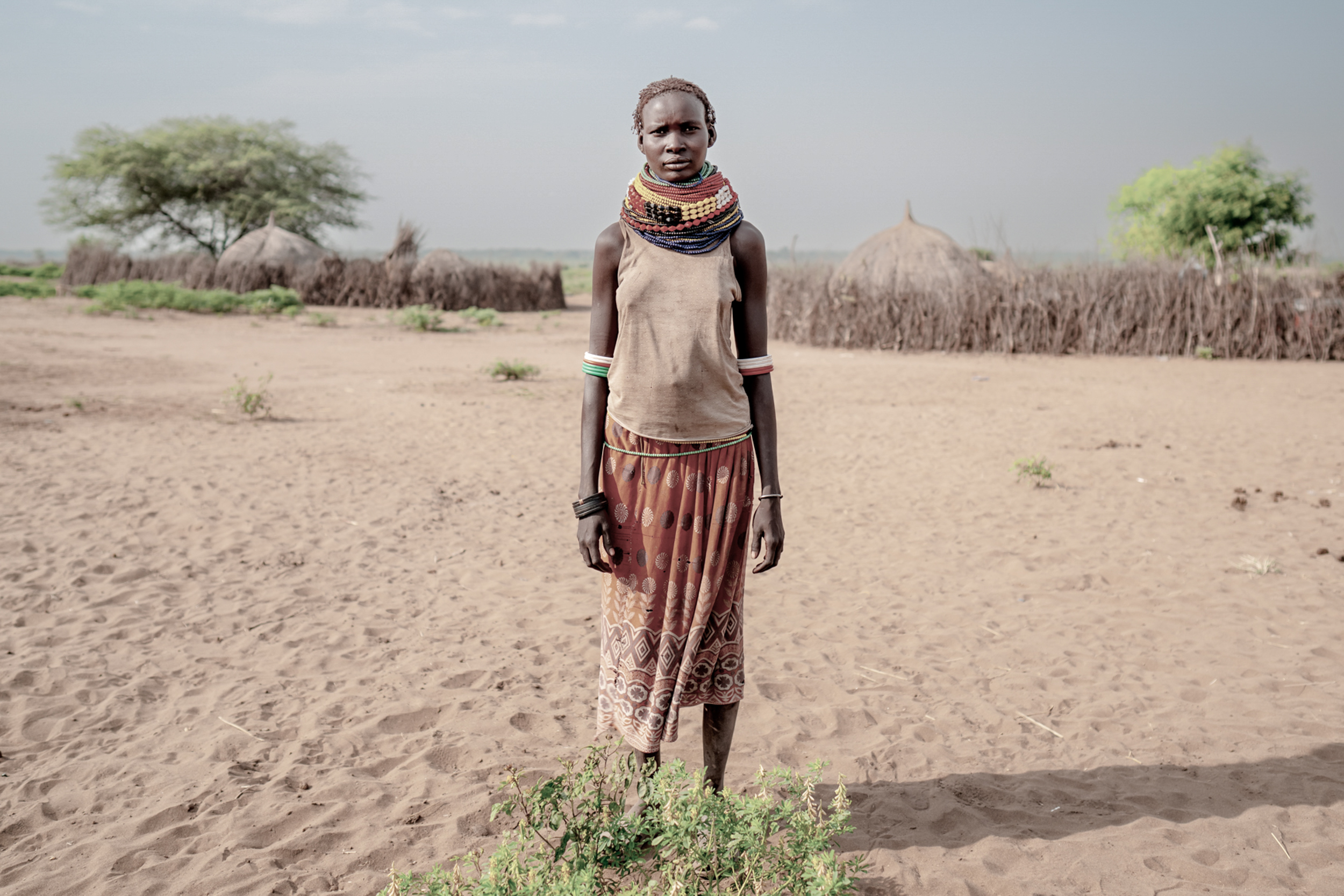
One of the most important features of this tribe is the colorful necklaces worn by the women, and thanks to the color, number, and arrangement of these traditional ornaments, one can determine their social rank, hierarchy, and family affiliation. For their part, the men sometimes wear lip piercings, bracelets, and metal rings. They may also have scarifications representing the number of enemies killed and animals hunted.
Photographic Opportunities: Candid portraits of Nyangatom men and women; semi-nomadic camp scenes; details of scarification and jewelry; images of Murles and Hamers.
Lodging.- Paradise Lodge or similar.
DAY 08 – MONDAY: TURMI – OMORATE – TURMI MARKET
After breakfast, we head toward Omorate to meet the Dassanech people. Their resourcefulness is visible in the materials they use to build homes—metal sheets, USAID bags, plastic, and anything they can find.
We visit a traditional village, observe their customs, and enjoy a show put on by young girls. The landscape flattens as we drive toward the shores of Lake Turkana. We walk along the lake’s edge, observing fishermen and traders from both Ethiopia and Kenya. If possible, we taste freshly grilled Nile perch. Returning to Turmi, we visit the lively Monday market—an excellent window into daily life.
The Hamer: Agro-pastoralists who live near the Kenyan border, they cultivate sorghum, millet, tobacco, and cotton, and keep goats and sheep. Their most iconic rite is the ukuli bula—the bull-jumping ceremony marking a boy’s passage into manhood. A young man must run naked across the backs of thirty bulls without falling. If he fails, it is considered an omen of bad luck.
They usually paint their bodies in many colors and wear lots of beads. Their most significant ceremony is the "bull-jumping" (ukuli bula), performed by young men as they leave puberty. Days before the ceremony, invitations are distributed in the form of knotted dry grass leaves. The ceremony lasts three days, but the most important is the last one. At sunset, thirty bulls are lined up, and the naked young man runs toward them and jumps onto the back of the first one, then begins to run over the animals. At the end of the line, he turns around and makes the journey in the opposite direction. If the initiate falls, it is considered a symbol of bad luck.
Photographic Opportunities: Vivid street scenes and market life in Turmi; lakeside fishermen at Turkana; Dassanech village portraits; traditional dance and dress; Hamer cultural expressions.
Lodging.- Paradise Lodge or similar.
DAY 09 – TUESDAY: TURMI – KARO – ALDUBA – TURMI
After breakfast, we drive toward the Omo River to visit the Karo people in the village of Korcho, perched dramatically on a curve of the river. The Karo, numbering only around 5,000, are the only sedentary group in the region. They farm, herd animals, gather honey, and practice fishing—once taboo, now practiced by youth. Their villages are well-built, with granaries and round huts. Physical beauty holds great importance; men decorate themselves elaborately with white and ochre paint and carry the borkota (headrest stool) and Kalashnikov rifles. Women style their hair in tiny knots, wear a lip nail, and adorn themselves with layers of necklaces.
The women wear their hair tied in small balls, carry a nail in their lower lip, and are loaded with necklaces and bracelets. They are quite sociable and make a type of mead-like drink that they consume at festivals after the harvest. These celebrations can last several days and are an occasion to dance, decorate themselves, and form couples. Like the Hamer, the young men practice the Bull-Jumping, an unavoidable initiation rite that negatively stigmatizes those who fail.
Later, we drive to Alduba for its Tuesday market, where we meet the Banna, Ari, and Hamer. We return to Turmi in the afternoon. Lodge accommodation. Full board.
Photographic Opportunities: Karo body painting and river views at Korcho; artisan architecture; festive scenes at Alduba market; Ari and Banna portraits; Kalashnikov-wielding shepherds and headrest stools.
Lodging.- Paradise Lodge or similar.
DAY 10 – WEDNESDAY: TURMI – KONSO
After breakfast, we begin our journey through the Weto desert. The arid expanse gives way to Erbore villages, where we pause to observe their nomadic way of life. We continue toward the fertile hills of Konso.
After lunch, we visit one of their celebrated walled villages. Lodge accommodation. Full board.
The Konso: With a population of around 350,000, the Konso are master terrace farmers. Their stone-walled villages, public gathering spaces, and cult of the dead—including wooden waga totems—reflect a highly structured and spiritual culture. They are also skilled artisans, renowned for their music, pottery, and weaving.
The Erbore.- The Erbore are a Cushitic-speaking ethnic group living in southwestern Ethiopia, near Lake Chew Bahir. They are semi-nomadic agro-pastoralists, raising cattle and cultivating sorghum and maize. Known for their striking body adornments, Erbore women wear large bead necklaces, headscarves, and aluminum jewelry. Men often go bare-chested, wear simple clothes, and carry traditional sticks or rifles. Their villages are organized into circular compounds, often shaded by acacia trees.
They maintain peaceful relations with surrounding tribes, avoiding the intertribal conflicts common in the region. Unlike the Mursi or Bodi, they favor modest adornment—women wear elaborate beadwork and aluminum jewelry rather than lip plates or scarification. Spiritual life centers on nature-based rituals, especially rainmaking ceremonies led by elders. Their settlements are more stable, organized in shaded circular compounds, reflecting a semi-sedentary lifestyle. Gender roles are balanced, with women taking active roles in trade and festivities. Their music and dance are social and inclusive rather than tied to initiation or war. They preserve oral traditions rather than visual body modification.
Photographic Opportunities: Terraced landscapes; walled villages with intricate design; waga statues; Eribore nomadic scenes; artisans at work.
Lodging.- Kanta Lodge or similar.
DAY 11 – THURSDAY: KONSO – ARBA MINCH
We transfer by road to Arba Minch. In the afternoon, we take a boat excursion on Lake Chamo. As the sun begins to set, the lake reveals its wonders—fishermen paddling fragile canoes, flocks of pelicans, hippos, and massive Nile crocodiles basking near the banks. Hotel accommodation. Full board.
Photographic Opportunities: Low-light lake photography; crocodiles and birdlife; silhouettes of fishermen; reflections on water; dramatic skies over Lake Chamo.
Lodging.- Haile Lodge or similar.
DAY 12 – FRIDAY: ARBA MINCH – ADDIS ABABA
Morning, we head into the Chencha mountains at 3,000 meters, where the Dorze people reside. Their beehive-shaped huts, sloped like an elephant’s trunk, rise above the lush vegetation. We visit their homes and workshops—these are expert weavers and farmers who prepare kocho (a fermented paste made from false banana) wrapped in leaves and aged underground. The views from Chencha over Lakes Abaya and Chamo are simply unforgettable.
In the afternoon, we take flight ET134 to Addis Ababa (13:15–14:20)
Photographic Opportunities: Portraits of Dorze artisans; bamboo landscapes; traditional huts; food preparation; sweeping vistas of the lakes from the highlands.
Lodging.- Best Western Hotel or similar
DAY 13 – SATURDAY: INTERNATIONAL DEPARTURES
Depending on the time of your international flight we will take you to the airport.